
In much of sub-Saharan Africa, a child with a fast-growing jaw or abdominal tumor may wait more than six weeks to learn what it is. Burkitt's lymphoma is one of the most common childhood cancers in the region, and it grows fast enough that a six-week wait is not a minor inconvenience. The bottleneck is not the treatment. It is the diagnosis. There are too few pathologists, too few labs able to run the stains that confirm the cancer, and too little time.
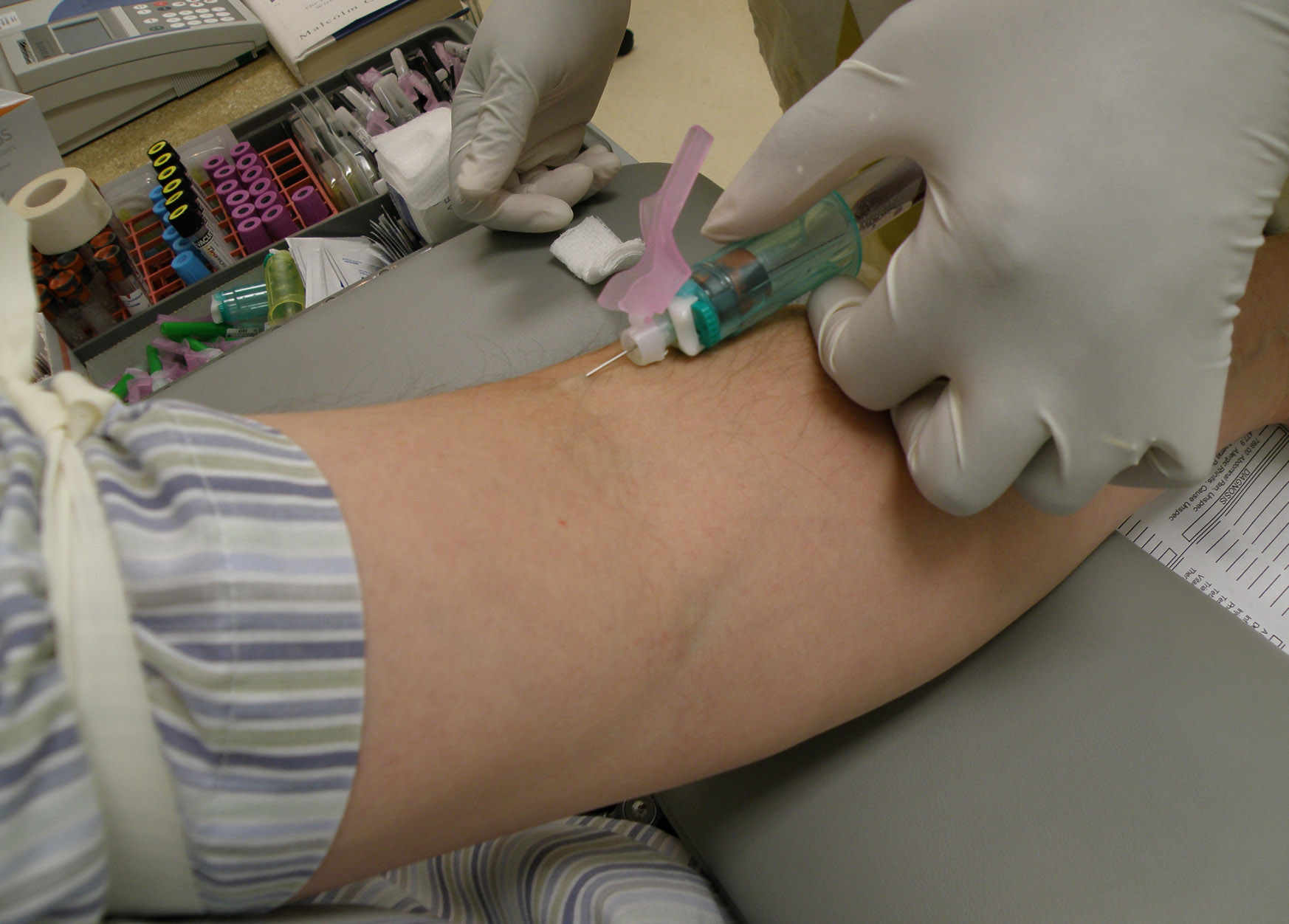
A study in Nature Medicine tries to route around that bottleneck with a blood test. Instead of cutting out tumor tissue and shipping it for expert review, the approach reads fragments of tumor DNA floating in a child's blood. The team tested it on 377 children and young adults with suspected lymphoma at four hospitals in Tanzania and Uganda, and the headline result is about speed as much as accuracy: median time to a diagnosis fell from 46.8 days to 6.5 days.
What the test actually reads
Most Burkitt's tumors in this part of the world carry Epstein-Barr virus, the same virus behind mononucleosis. They also carry a signature rearrangement that jams the MYC gene next to an antibody gene, switching MYC into overdrive. The test looks for three things in circulating tumor DNA: mutations in MYC, those MYC-antibody translocations, and a pattern the researchers call Epstein-Barr virus fragmentomics, which is essentially the shape and size distribution of viral DNA pieces shed into the blood.
The team combined those molecular clues with basic clinical features and trained six statistical models, then picked the best one. In cross-validation on 212 patients, that model reached an area under the curve of 0.95, with sensitivity of 0.86 and specificity of 0.95. In other words, it caught most true cases and rarely flagged a child who did not have the disease. A separate group of 56 patients, enrolled prospectively, gave an even higher area under the curve of 0.98.
Speed is the point
Accuracy numbers are easy to admire and easy to overrate. What makes this work land is the logistics. In 42 percent of participants, the liquid biopsy was the only diagnostic result available when the medical team sat down to decide on care. The tissue diagnosis, the supposed gold standard, simply had not come back yet. When a cancer doubles in days, having any reliable answer in under a week changes what a clinician can do.
Getting there took real groundwork. Before running the head-to-head comparison, the researchers spent time building up local pathology capacity so they had a trustworthy standard to measure against, using tumor morphology, a slimmed-down set of validated stains, and review by two independent pathologists. The blood test was not judged against a guess. It was judged against the best diagnosis the region could produce.
Where it still falls short
This is a diagnostic aid, not a finished product. The best model leaned on sequencing and bioinformatics that are not yet routine at a district hospital, so the speed gains depend on keeping that pipeline running locally rather than shipping samples abroad. The prospective validation group was small, 56 people, and the whole effort was tuned for the Epstein-Barr-positive form of Burkitt's that dominates in endemic areas; it says little about lymphomas elsewhere with different biology. And a test that reduces turnaround only helps if the treatment that follows is available and affordable, which is a separate problem the paper does not solve.
Still, the direction is worth noting. A lot of cancer diagnostics research chases marginal accuracy in settings that already have MRI machines and pathology departments. This one went after a place where the missing ingredient is a timely answer, and showed that a blood draw can supply one. For a child whose tumor is measured in days, that is the number that matters.
Chamba, C. et al. "Liquid biopsy for the diagnosis of EBV-positive Burkitt's lymphoma in endemic areas." Nature Medicine, 2026. doi.org/10.1038/s41591-026-04291-z
PubMed PMID: 41857199.
Photograph: Richardelainechambers, Public domain, via Wikimedia Commons.
Comments