

A genetic test comes back. There is a single-letter change in the LDLR gene, the one that hands the liver its instructions for clearing cholesterol out of the blood. Does this particular change matter? For close to half of the mutations doctors actually run into, the honest answer has been a shrug. The variant gets filed under "uncertain significance," which is a clinical way of saying nobody can tell the patient whether they are carrying a time bomb.
A team led by Daniel Tabet at the University of Toronto set out to erase that gray zone. Writing in Science, they report testing roughly 17,000 mutations in LDLR, which is close to every coding change the gene can sustain. The result is essentially a lookup table. Find your variant, read off whether it breaks the receptor.
Reading every letter before a patient ever shows up
Familial hypercholesterolemia is one of the most common serious genetic conditions, and LDLR is its main culprit. When the receptor works, liver cells stud their surface with it and pull low-density lipoprotein particles out of circulation. When a mutation cripples the receptor, LDL builds up, and arteries start to fur. People with the condition can develop heart disease decades earlier than they otherwise would.
Instead of waiting to see mutations one at a time in patients, the team made them on purpose. They generated the full library of possible coding variants and dropped them into cells, then measured two things that a working receptor has to do. First, does the receptor actually reach the cell surface? Second, once it is there, can it grab LDL and bring it inside? Each variant got a score on both counts. A change that tanks surface levels or kills uptake gets flagged as damaging. One that leaves both intact is probably harmless.
This approach has a name, deep mutational scanning, and its appeal is timing. The measurement happens up front, in bulk, before any specific person's test result needs interpreting. The map is finished and waiting.
Does the lab dish match the clinic
A functional score is only useful if it reflects what happens in bodies. So the authors checked their numbers against people. Variants their assay called damaging lined up with hyperlipidemia in prospective human cohorts, meaning the lab readout tracked the trait it was supposed to predict.
The scores did something extra too. Common heart-disease risk is often estimated with polygenic scores, which add up the small effects of many genetic variants. When the team folded their LDLR functional data into those estimates, risk prediction improved. A rare variant that a polygenic score would normally overlook could now be weighed properly. The map recovered biochemistry that was already known, which is a good sanity check, and then went further into variants nobody had characterized.
What the map does not settle
A cell-based assay is a model, not a person. It reports whether a receptor reaches the surface and pulls in LDL under lab conditions. It does not capture everything a body does, including how other genes, diet, and a lifetime of habits push cholesterol around. Variants that sit outside the coding region, or that act through more roundabout mechanisms, fall outside what this particular screen sees. And translating a functional score into a formal clinical classification still runs through the deliberate frameworks that genetics labs use, with the assay serving as strong evidence rather than a verdict on its own.
There is also the plain matter of adoption. A resource like this changes care only when it reaches the people writing genetic reports. Still, the direction is worth noticing. Rather than reacting to each new variant as it turns up, this line of work tries to answer the question before it is asked. For a gene where an uncertain result can leave a family guessing about their hearts, having the answer already on the shelf is a real shift.
Tabet, D. et al. "The functional landscape of coding variation in the familial hypercholesterolemia gene." Science, 2026. doi.org/10.1126/science.ady7186
PubMed PMID: 41166440.
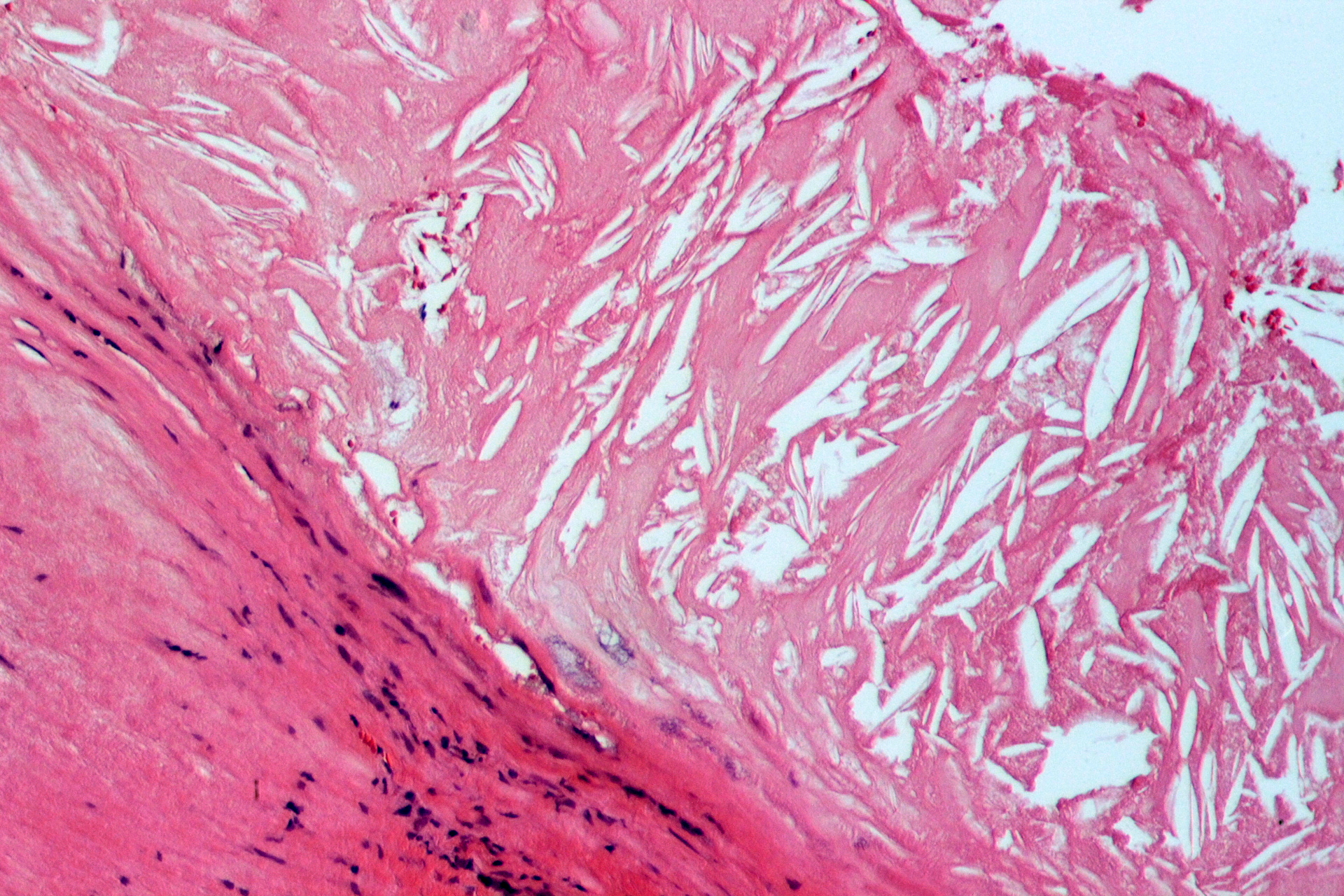
Photograph: Patho, CC BY-SA 3.0, via Wikimedia Commons.
Comments