
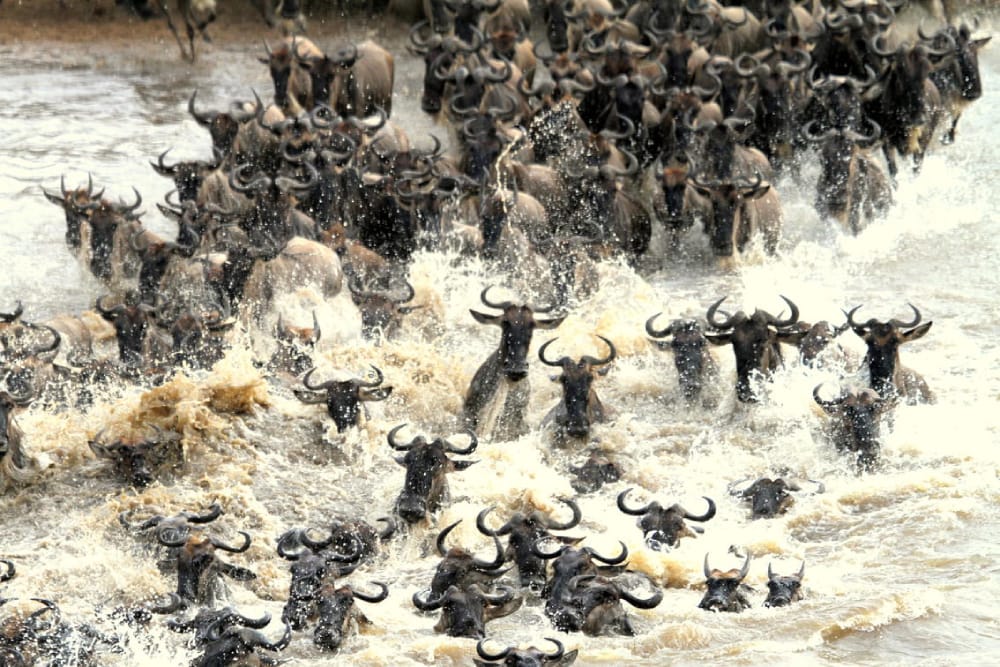
Picture the great wildebeest herds pouring across the Mara River, a million hooves churning the water. It looks like the biggest thing moving on Earth. It is not even close. When researchers added up the weight of every wild bird, land mammal and crawling arthropod, then multiplied each by how far it travels, the whole living cavalcade came out to roughly one-sixth of what humans move just by walking.
That single comparison is the sharp edge of a new study in Nature Ecology & Evolution from Yuval Rosenberg, Ron Milo and colleagues at the Weizmann Institute of Science and collaborators in Vienna and Pasadena. The team set out to measure something that had never been tallied whole: the total movement of living matter across the planet. Not just how much life there is, but how much of it is on the move, and how far.
Turning motion into a number
The metric they use is biomass movement, the mass of an organism multiplied by the distance it covers. A gram-scale insect flying kilometers and a tonne-scale whale drifting across an ocean both register on the same scale. Adding those contributions across entire groups of animals lets you compare a swarm of arthropods against a population of large mammals against the daily commute of eight billion people.
The headline result reframes what "activity" means on a planetary level. The combined biomass movement of all wild birds, land arthropods and wild land mammals is about 40 times smaller than the total biomass movement of humans. Walking alone, without any engines involved, already outweighs the wild land animals six to one. Fold in cars, trains, ships and planes carrying human bodies around, and the gap widens enormously.
None of this depends on humans being the heaviest organisms. We are not. It comes from how far modern people travel and how many of us there are. The authors estimate human biomass movement has grown roughly 40-fold over historical time, a change driven by population growth stacked on top of motorized transport.
The ocean still wins, but it is fading
There is one arena where wild life still overwhelms us. The biomass movement of marine animals is the largest of anything alive, larger than the human total. Fish, whales and the vast tonnage of small ocean creatures moving through the water column carry more living mass over more distance than any terrestrial group, us included.
But that lead has been shrinking. The researchers estimate marine animal biomass movement has been cut roughly in half since 1850. The cause is blunt: industrial fishing and whaling stripped out much of the large animal biomass that used to circulate through the seas. So even the one category that still exceeds humanity is a diminished version of what it was before the industrial era.
Put the two findings side by side and a picture of the Anthropocene emerges that is more visceral than the usual charts of carbon or land use. On land, the physical churn of life is now mostly us. In the water, wild movement still dominates, but it is a receding tide.
What the tally can and cannot say
This is an accounting exercise, and its numbers are estimates built from many separate data sources rather than direct measurement. Global figures for the mass of arthropods or the travel distances of small animals carry real uncertainty, and the authors present ranges, not precise counts. Biomass movement also measures physical scale, not ecological importance. A small quantity of movement by a keystone pollinator or a seed-dispersing bird can matter far more to an ecosystem than its raw mass-distance value suggests. The study is a measure of magnitude, not of consequence.
Even with those limits, the framing does something useful. It gives a common yardstick for comparing human and non-human activity, and the comparison is stark. We have become the dominant mover of living matter across the land surface of the planet, and we have quietly halved the movement of the animals that still rule the sea. According to PubMed, the work appears in Nature Ecology & Evolution (doi.org/10.1038/s41559-025-02863-9).
Rosenberg, Y. et al. "Human biomass movement exceeds the biomass movement of all land animals combined." Nature Ecology & Evolution, 2025. doi.org/10.1038/s41559-025-02863-9
PubMed PMID: 41145680.
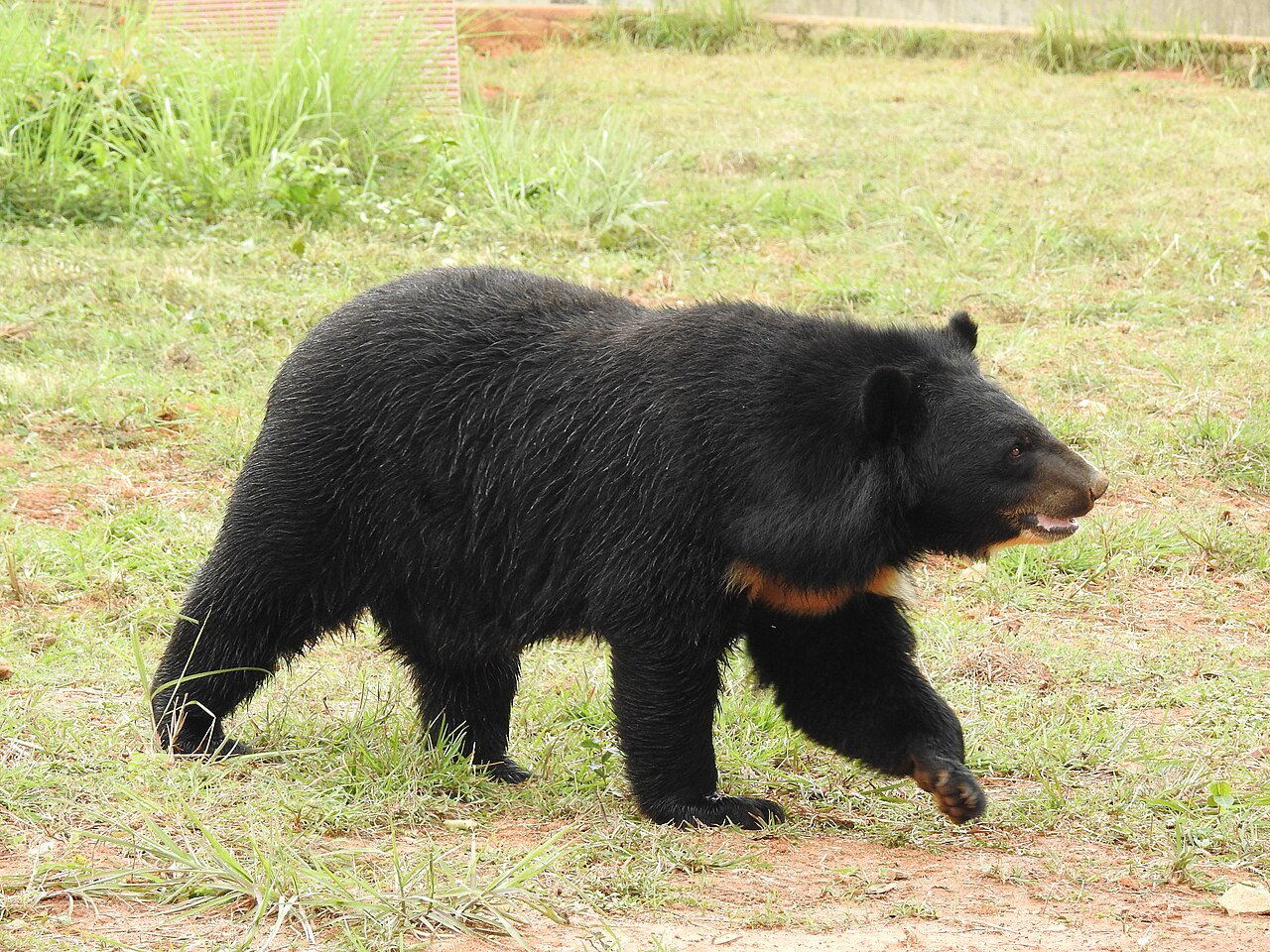
Photograph: Kidoleeee, CC BY-SA 4.0, via Wikimedia Commons.
Comments