
For fifteen years, every documented HIV cure carried the same footnote. The person had received a stem cell transplant from a donor with two broken copies of a gene called CCR5, and that double mutation was assumed to be the thing doing the work. HIV uses the CCR5 protein as a doorway into immune cells. Delete the doorway on both chromosomes, and the virus supposedly has nowhere to go. The Berlin patient, cured back in 2009, set the template. So did the handful of cases that followed.
A new report in Nature from a team led by Christian Gaebler at Charite in Berlin describes a man who was cured anyway, without the genetic lock everyone thought you needed.
One working copy, and it stopped mattering
The patient was living with HIV and developed acute myeloid leukaemia. He needed an allogeneic stem cell transplant to treat the cancer. He himself carried one normal CCR5 gene and one deleted copy, the heterozygous wild-type/Δ32 arrangement. His donor, an HLA-matched unrelated volunteer, had the exact same setup: one working copy, one broken one. That matters because a single functional CCR5 gene is enough to build the protein. Both men had a fully usable HIV doorway.
Three years after the transplant, the patient stopped antiretroviral therapy. According to the paper, HIV remission has now held for more than six years, with plasma HIV RNA staying undetectable the whole time. This is only the seventh cure documented among the roughly 88 million people who have acquired HIV since the epidemic began.
Before the transplant, the researchers found intact proviral HIV genetic material, the kind of hidden blueprint that normally lets the virus roar back once treatment stops. Afterward, they went looking for replication-competent virus in blood and in intestinal tissue and found none. The man's HIV-specific antibody and T cell responses declined or vanished, which is what you would expect if the immune system simply had no virus left to react to.
If not the mutation, then what
The obvious question is why this worked. The authors point to reservoir clearance rather than genetic resistance. Their leading candidate is the transplant itself: donor immune cells attacking and replacing the recipient's own cells, and along the way wiping out the reservoir of HIV-infected cells that antiretroviral drugs cannot touch. The paper also notes that the patient had high antibody-dependent cellular cytotoxicity activity at the time of transplantation, a form of immune killing that may have helped clear infected cells.
The framing here is a genuine shift. The field had treated homozygous Δ32 donors as close to mandatory, which is a serious problem because that mutation is rare. Only a small fraction of people carry two copies, and finding one who also matches a patient's tissue type is a needle in a haystack. If durable remission can come from a transplant that leaves CCR5 functional, the pool of potential donors widens, and the mechanism worth chasing becomes reservoir reduction instead of a specific inherited variant.
Why this is not a template yet
None of this makes stem cell transplantation a treatment for HIV. It is a brutal, high-risk procedure justified only when someone needs it for a blood cancer. Nobody would put a healthy person through it to clear a virus that antiretrovirals already control. This is a single case, one person, one biology, and single cases can mislead. The authors are careful about that. What a case like this offers is not a therapy but a clue about which biological levers actually move the needle.
And the reservoir remains the hard part. The reason HIV is so difficult to cure is that it hides as intact provirus inside long-lived cells, silent and untouchable by drugs, ready to restart. The lesson the authors draw is that clearing that reservoir, however it happens, may matter more than blocking the CCR5 doorway. For the wider effort to build cures that do not require a bone marrow transplant, that is a useful redirection of where to aim.
Gaebler, C. et al. "Sustained HIV-1 remission after heterozygous CCR5Δ32 stem cell transplantation." Nature, 2025. doi.org/10.1038/s41586-025-09893-0
PubMed PMID: 41326734.
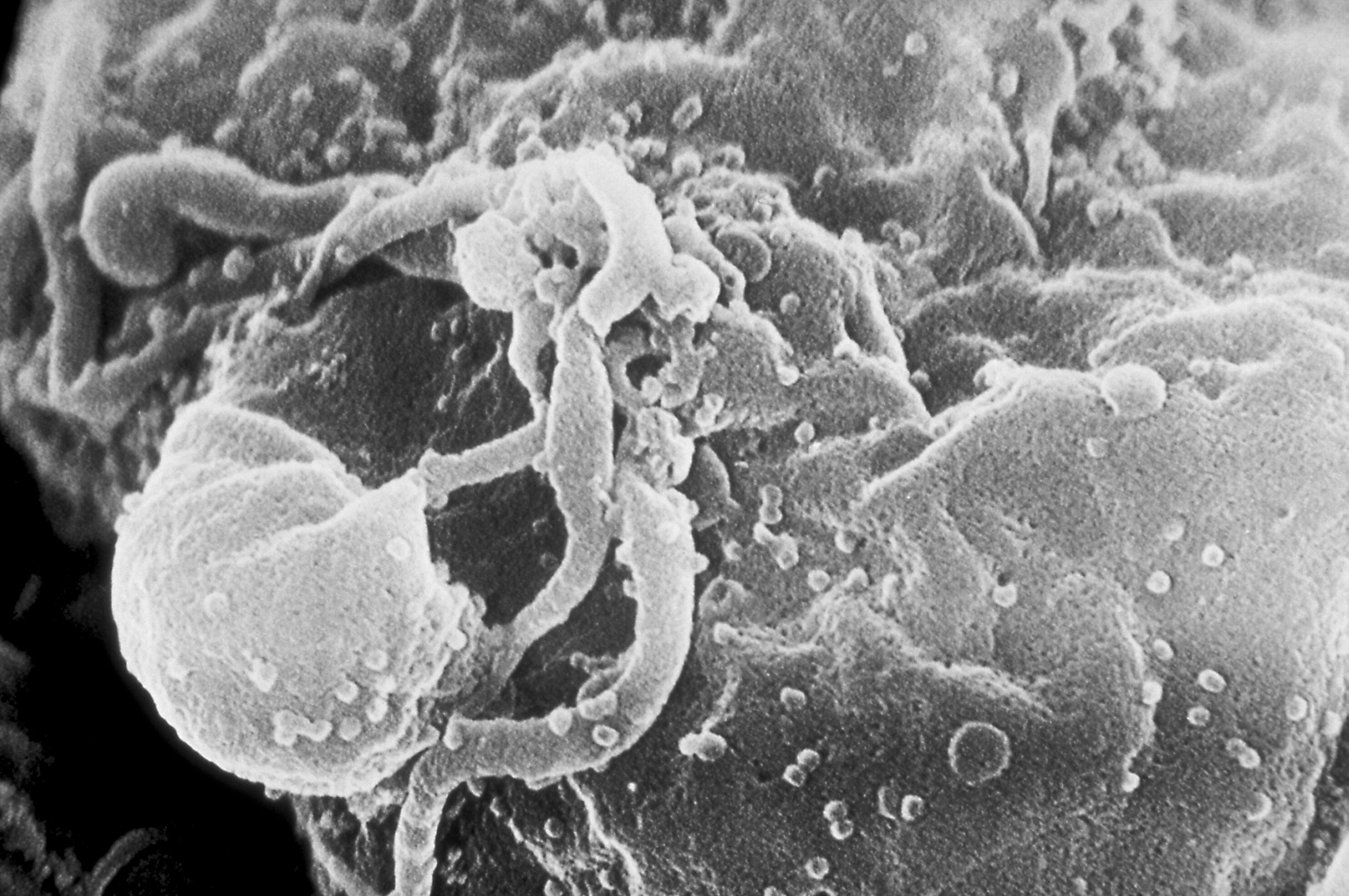
Photograph: C. Goldsmith, CDC, Public Domain, via Wikimedia Commons.
Comments