Cut the vines, and the forest grows up faster. That is the blunt takeaway from an 18-year experiment spread across 500 hectares of logged rainforest in Borneo, where researchers tested the two things people usually do to help a damaged tropical forest heal. One is the obvious move: plant more trees. The other is quieter and stranger. You walk through the forest and sever the thick woody climbers, the lianas, that drape over the surviving trees. It turns out the second option worked far better, and cost a fraction as much.
The study, published in Current Biology by Toby Jackson and colleagues, drew on one of the largest and longest-running forest restoration trials anywhere. The site sits in Sabah, on land that had been selectively logged decades ago. Selective logging does not clear a forest outright. It removes the biggest, most valuable trees and leaves a tangled, half-open mess behind, the kind of place where lianas thrive because there is suddenly light and structure to climb.
How you measure a forest healing
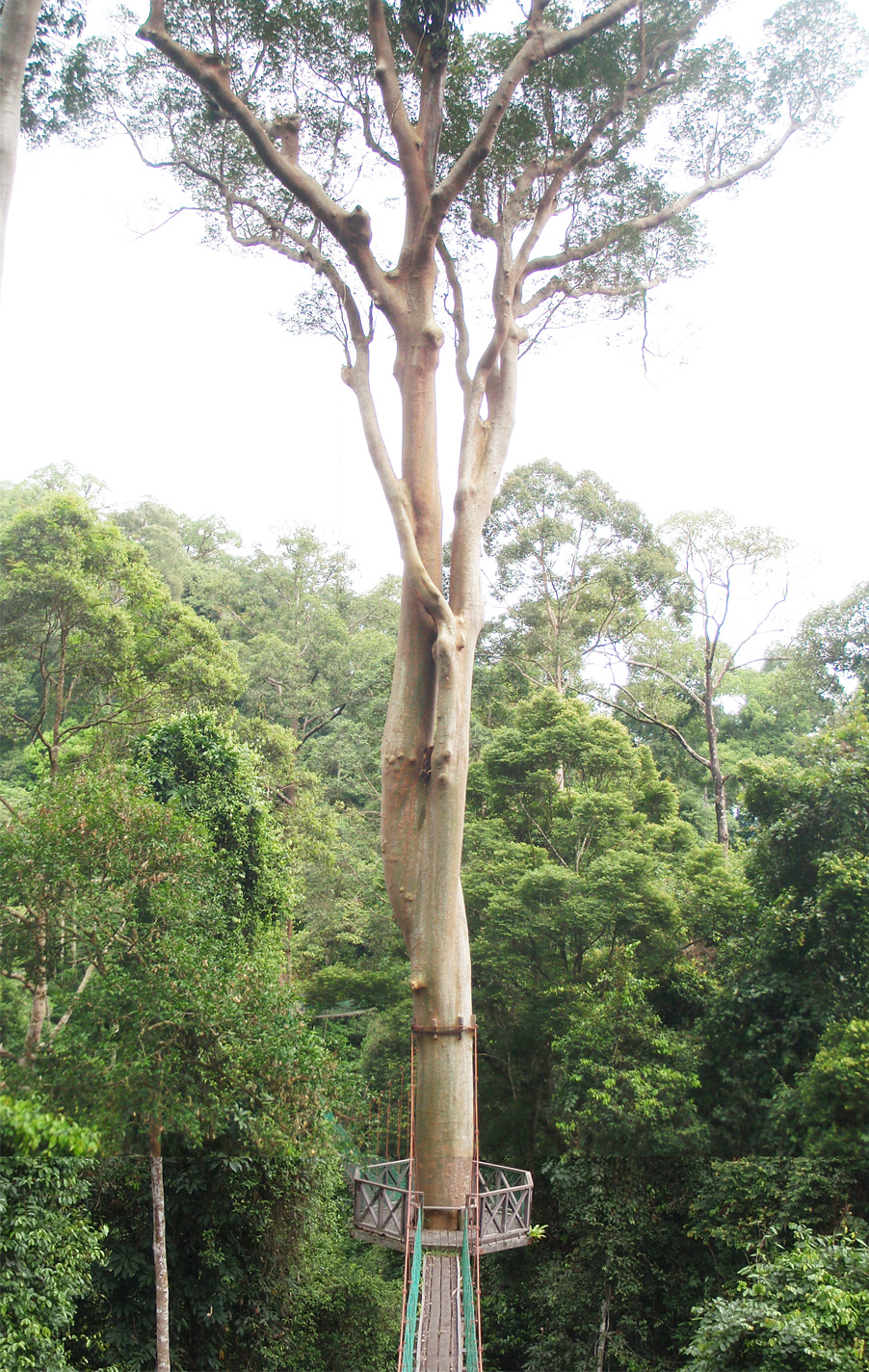
Tracking recovery across hundreds of hectares by hand would be impossible, so the team flew aircraft over the plots and used laser scanning, or LiDAR, to build detailed 3D maps of the canopy. Repeat those flights over years and you can watch the forest gain height the way a doctor watches a child grow on a chart. Canopy height is a decent proxy for how much a forest has bounced back, since taller structure usually means more biomass, more stored carbon, and more room for the animals that live up there.
The numbers told a lopsided story. Enrichment planting, where crews add seedlings of desirable species, lifted the average canopy about 1.6 meters above untouched control plots over the full 18 years. Liana cutting did better, and it did it faster. Plots where the climbers were removed gained 3.7 meters of canopy height in just 9 years. That is more than four times the pace. Two things drove the jump. The remaining trees grew faster once they were freed from the strangling vines, and roughly half as many of them died.
Why the vines matter so much
Lianas are not villains in an intact forest. They are a normal part of tropical ecosystems, feeding animals and knitting canopies together. The problem is what happens after disturbance. In a logged forest they can explode in abundance, wrapping around young trees, hogging light, and competing hard for water. A tree spending its energy fighting a liana for sunlight is a tree that grows slowly and dies young. Snip the connection and that pressure eases. The forest, in effect, gets out of its own way.
The cost angle is what makes this land. Growing seedlings in a nursery, carrying them into the forest, planting them, and tending them is labor-intensive and expensive. Cutting lianas needs little more than trained people with hand tools. The authors put liana cutting at roughly ten times cheaper than enrichment planting. For governments and conservation groups trying to restore vast areas on thin budgets, a method that is both faster and an order of magnitude cheaper is worth paying attention to.
What the study does not settle
A few cautions are worth holding onto. This is one landscape, in one part of Borneo, on forest that was logged rather than cleared to bare ground. Lianas removed from a forest can grow back, so the gains measured here may need repeat cutting to hold over longer timescales. And canopy height, useful as it is, does not capture everything we care about. A taller forest is not automatically a more diverse one, and the study followed structure more closely than it followed the return of specific plant and animal species. Cutting climbers wholesale also removes a resource that some wildlife depends on, so the tactic suits recovering degraded forest, not healthy old growth.
Even with those limits, the message is encouraging. Much of the world's tropical forest is not pristine and not gone. It is this in-between kind, beaten up by logging but still standing, still capable of recovering if given a nudge. The work suggests the most effective nudge might not be adding anything at all. Sometimes you help a forest most by taking one thing away.
Jackson, T.D. et al. "Liana cutting accelerates the structural recovery of once-logged tropical forests at a fraction of the cost of tree planting." Current Biology, 2026. doi.org/10.1016/j.cub.2026.04.056
PubMed PMID: 42155447.
Photograph: T. R. Shankar Raman... see image credit. Bobbean, CC BY-SA 3.0, via Wikimedia Commons.
Comments