
Since early 2024, H5N1 avian influenza has been circulating in American dairy herds, and cows sick with it shed startling amounts of virus straight into their milk. Pasteurization handles that. But raw-milk cheese skips the heat step entirely, and a wedge of it can sit ripening in a cave for months before anyone eats it. So the obvious question is whether the virus is still alive when it reaches the plate.
A team at Cornell University set out to answer it directly. Writing in Nature Medicine, Mohammed Nooruzzaman and colleagues made small batches of raw-milk cheese, seeded them with H5N1, and tracked whether infectious virus persisted. The short version: it did, and for a long time.
Acidity is the whole story
The researchers made cheeses from milk adjusted to three different starting acidities, chosen to span the range you actually find in raw-milk cheeses sold at market: pH 6.6, 5.8, and 5.0. Then they waited.
At the two less-acidic settings, pH 6.6 and 5.8, infectious virus made it through the cheesemaking process and was still recoverable after 120 days of aging. Four months in, and the flu was not dead. At pH 5.0, the picture flipped. The virus did not survive cheesemaking at all. That single step down the pH scale was the difference between a persistent hazard and none.
To check that this was not just an artifact of spiking clean milk in a lab, the group also examined raw-milk cheeses that had been made, unknowingly, from naturally contaminated milk during the outbreak. Those real-world samples behaved the same way, which matters a great deal for a finding meant to inform food safety.
What the ferrets did and did not catch
Persistence in a food is not the same as a route into a person, so the team turned to ferrets, the standard animal stand-in for human influenza. Ferrets fed H5N1-contaminated raw milk became infected. That part lines up with earlier work and with why regulators keep warning against drinking raw milk right now.
The cheese told a different story. Ferrets fed the contaminated raw-milk cheese, or a suspension made from it, did not become infected. So even though live virus was sitting inside the cheese, eating it did not transmit disease to the animals. The cheese matrix, the acid, the salt, the digestive process, or some combination, seems to blunt the path from food to infection in a way that liquid milk does not.
Both facts are worth holding at once. Infectious virus can linger in the product for months. And in this feeding model, that product did not make the animals sick.
Why food scientists still worry
Here is the tension. A pathogen that stays viable for 120 days has a lot of time to find an opening, whether through a handler, a cut, a splash, or a contamination event downstream that no one designed for. The ferret result is reassuring about one specific exposure, eating the finished cheese, but it does not clear every scenario. The authors frame their work as a case for extra safeguards in raw-milk cheese production rather than a green light.
The practical lever they identified is acidity. Pushing the milk to pH 5.0 before cheesemaking wiped the virus out in these experiments. That is a concrete, testable control point for producers, and a reason the pH your cheese starts at is not a trivial detail.
A few limits are worth naming plainly. The infection experiments used ferrets, and ferrets are not people; their feeding behavior and physiology differ from ours. The cheese batches were small, three or four per condition, which is normal for this kind of controlled study but keeps the numbers modest. And the work tested specific cheese styles and pH values, not the full sprawl of aged raw-milk cheeses on the market. What it does establish is clear enough: with H5N1 in the milk supply, the acidity of a raw-milk cheese is doing real biological work, and the margin between safe and not can come down to a fraction of a pH unit.
Nooruzzaman, M. et al. "H5N1 influenza virus stability and transmission risk in raw milk and cheese." Nature Medicine, 2025. doi.org/10.1038/s41591-025-04010-0
PubMed PMID: 41062832.
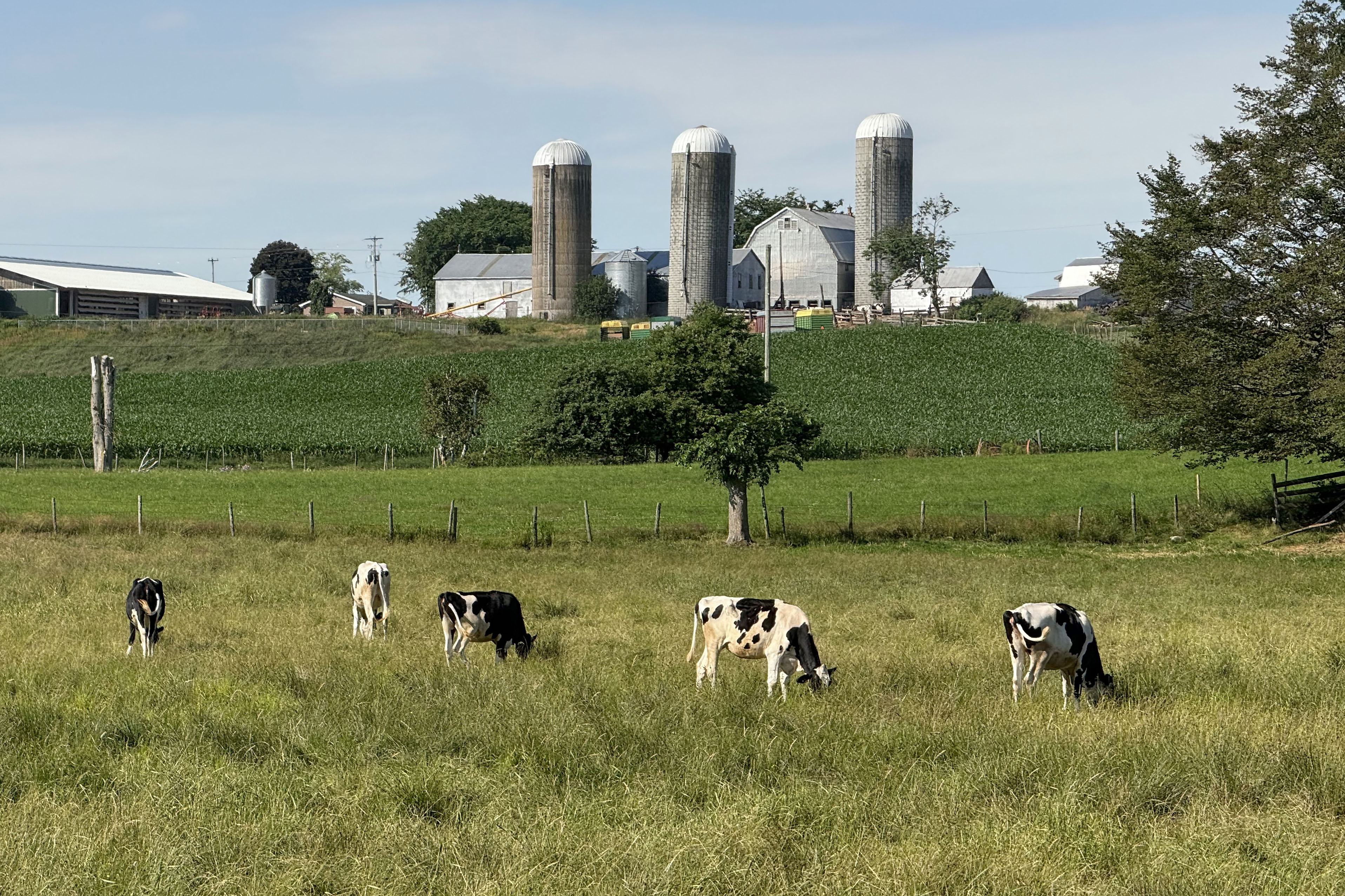
Photograph: Quintin Soloviev, CC BY 4.0, via Wikimedia Commons.
Comments