

Every cell already knows how to throw things away. It tags proteins it no longer wants with a chemical label, and a molecular shredder finds the label and pulls the protein apart. Biologists have spent years trying to hijack that system to remove proteins of their own choosing, but the trick has always come with strings attached. You usually have to fuse a special tag onto your target ahead of time, or feed the cell a custom chemical that only works for one particular protein.
A team at Jiangnan University in Wuxi decided to skip the fusion step entirely. In work published in Nature Communications, they describe a system that recognizes a protein from the outside and marks it for deletion, using guide proteins that were designed on a computer rather than borrowed from nature. They call it GPlad, short for guided protein labeling and degradation. The appeal is that you can point it at something without re-engineering that something first.
How the guide finds its target
The core idea borrows from how antibodies work. A guide protein is shaped to stick to one specific target and nothing else. But instead of just binding, the guide carries an enzyme called McsB that stamps a chemical mark onto whatever it is holding. In bacteria, that mark is a flag for the cell's disposal machinery, so the stamped protein gets hauled off and destroyed.
What makes this practical is that the guides are designed rather than discovered. The team used protein design software to generate binders for a range of targets, then let McsB do the labeling. They showed it working on glowing marker proteins, on the cell's own metabolic enzymes, and on human proteins expressed inside the bacteria. Because the guide does the recognizing, swapping in a new target mostly means designing a new guide, not rebuilding the whole apparatus. That is the "plug-and-play" part the authors keep pointing to.
From an off switch to a full circuit
Deleting a protein is useful on its own, but the team pushed further and built a way to block the deletion too. A second designed protein, which they call antiGPlad, gets in the way of the guide and protects the target. With one system that removes proteins and another that shields them, you have the raw parts for logic.
They wired these into small genetic circuits. There is an ON/OFF switch that decides whether a target survives. There is a signal amplifier. There is even an oscillator, where a protein's level rises and falls in a repeating rhythm. They also made a light-controlled version, OptoGPlad, so a target can be degraded only when you shine light on the cells. That kind of on-demand control is hard to get with methods that depend on gluing a tag onto the protein in advance.
The payoff showed up in two concrete places. When the researchers used light to knock down a DNA-repair protein called MutH, the bacteria adapted to a chemical stress far faster, reaching the goal in roughly 100 generations instead of 220. And in a strain built to make a useful chemical feedstock, degrading a competing enzyme raised the yield to about 92.6 grams per liter, a 23.8 percent improvement over a popular CRISPR-based approach that shuts genes off at the source.
What the study can't say yet
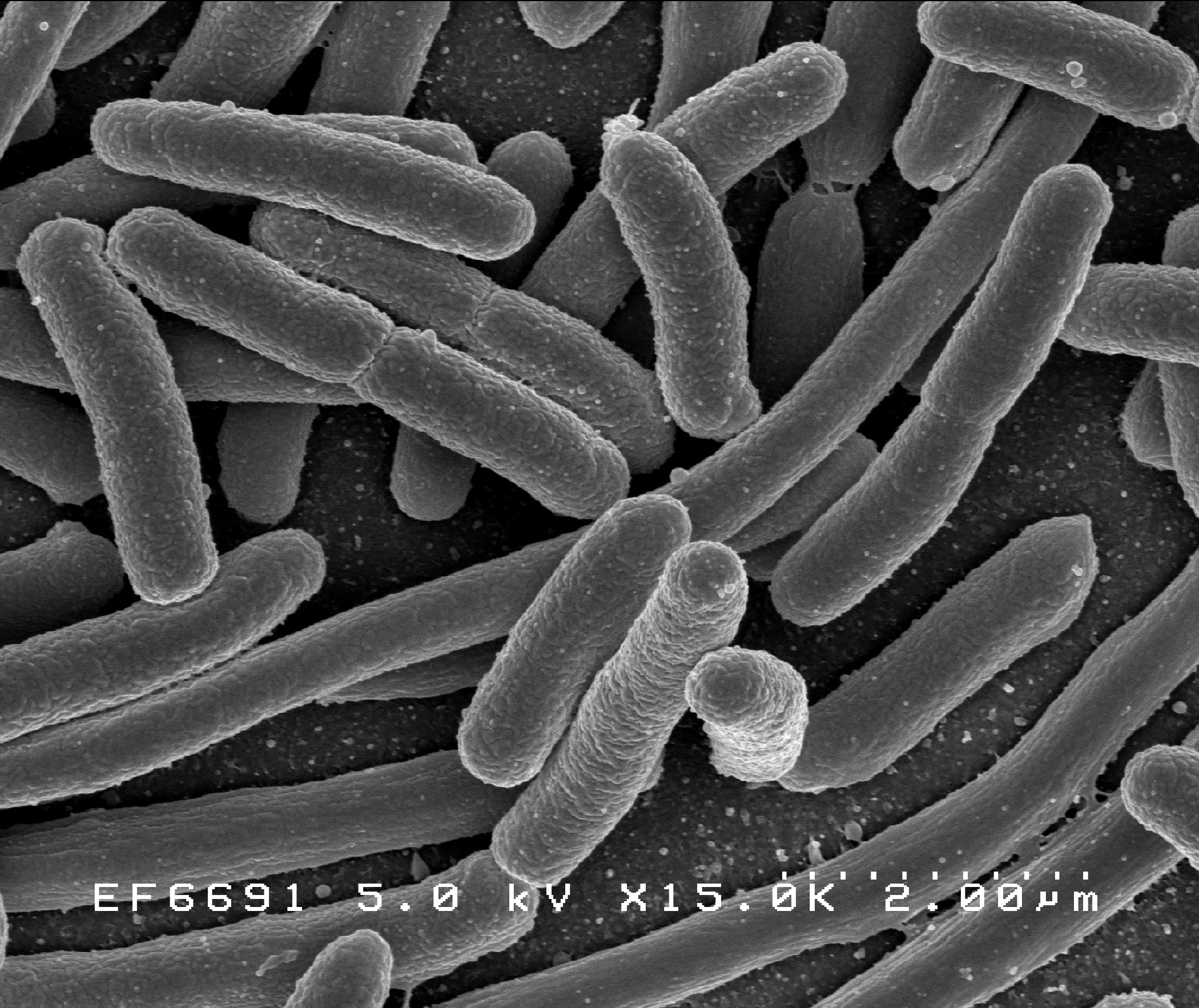
All of this happened in Escherichia coli, the workhorse bacterium of the lab. The labeling step leans on a bacterial marking-and-disposal pathway, and animal cells do their bookkeeping differently. So the leap from a bench strain to a human cell, or to a therapy, is not a given. The authors frame GPlad as a tool for synthetic biology and metabolic engineering, not as a drug.
There are also open questions the paper does not fully resolve. A designed guide is only as good as its aim, and off-target binding could mark the wrong protein. Getting the amounts right matters too, since the whole scheme depends on producing enough guide to catch the target without flooding the cell. The oscillator and the switches are proofs of concept rather than robust, standardized components.
Still, the direction is worth noting. For years, targeted protein removal has been a menu of one-off tricks, each tied to a specific target or a specific chemical. GPlad turns the recognition step into something you design, which means the same framework can be aimed at many things. In a bacterium that already produces industrial chemicals, being able to delete a chosen enzyme on cue, and to do it with light, is the kind of control that metabolic engineers have wanted for a long time.
Li et al. "De novo designed protein guiding targeted protein degradation." Nature Communications, 2025. doi.org/10.1038/s41467-025-62050-z
PubMed PMID: 40676011.
Photograph: NIAID, Public domain, via Wikimedia Commons.
Comments