For decades, one of the few reassuring numbers in climate science has been the greening of the land. More carbon dioxide in the air acts like fertilizer for plants, and satellites have watched forests, grasslands, and croplands soak up a growing share of our emissions. That carbon sink has quietly bought the planet time. A study in Nature Ecology & Evolution now argues that the buying is close to running out.
Shangrong Lin and colleagues combined direct field measurements with a process-based model to project how global gross primary production, or GPP, will change through the twenty-first century. GPP is the total amount of carbon that vegetation pulls out of the atmosphere through photosynthesis. It is the raw input to almost everything green. Their projection: global GPP will climb to a peak around the middle of this century, then start to fall.
The size of that peak is the part worth sitting with. Earlier Earth system models leaned heavily on the carbon dioxide fertilization effect and painted a picture of steadily rising plant productivity. Lin's team finds the peak is only about 5.4 percent higher than today, give or take half a percent. After that, the line bends down.
Thirsty air, not thirsty soil
The culprit is not drought in the usual sense. It is the dryness of the atmosphere itself. As the climate warms, warmer air can hold more water vapor, which increases what scientists call the vapor pressure deficit. In plain terms, the air pulls harder on the moisture inside leaves. Plants respond by partly closing the tiny pores they use to take in carbon dioxide, and photosynthesis slows. So the same warming that boosts the fertilization clock also winds the clock the other way.
The authors used data from eddy-covariance towers, which are instruments scattered across ecosystems worldwide that measure the exchange of carbon and water between land and sky. That grounding in observation is what lets them push back on the rosier model output. When they let atmospheric dryness rise with warming, the fertilization gains largely get eaten.
Two greenhouse gases get singled out for special blame. Methane and nitrous oxide both warm the planet, and warming dries the air, but neither fertilizes plants the way carbon dioxide does. Their contribution to vegetation is nearly all downside. The paper frames this as an underappreciated cost of non-CO2 emissions, one that standard carbon accounting can miss.
The tropics feel it first
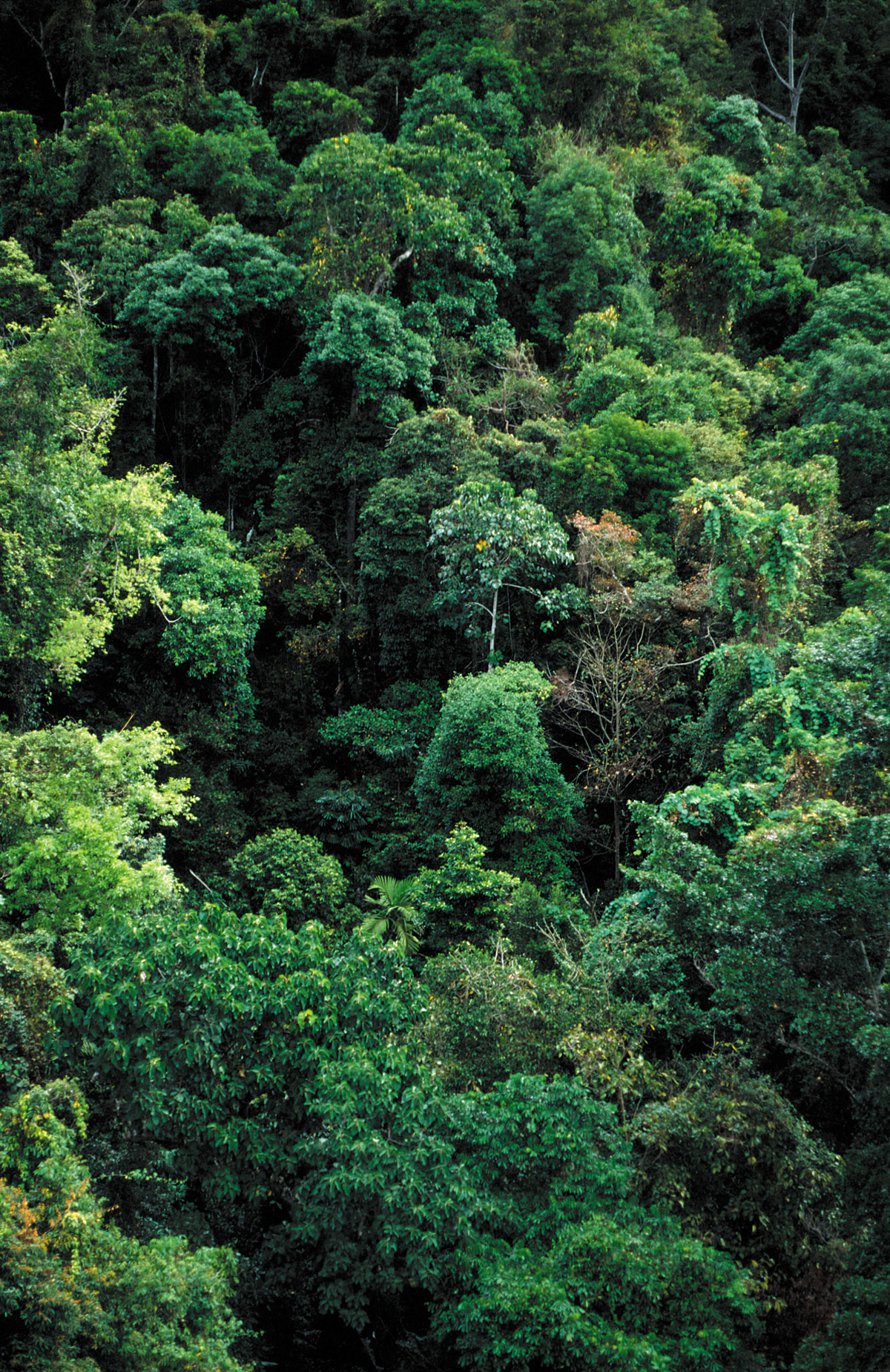
The slowdown is not spread evenly. It shows up most sharply in tropical regions, where forests already sit near the upper edge of what heat and humidity allow. Tropical rainforests are among the most productive ecosystems on Earth and a huge piece of the land carbon sink. If their growth stalls, the global budget stalls with it.
That matters beyond the accounting. Climate policy and the temperature targets built into it quietly assume the land will keep absorbing a chunk of what we emit. If terrestrial GPP peaks and declines, more of each ton of carbon stays airborne, and the job of cutting emissions gets harder rather than easier.
What the projection can and cannot say
This is a modeling study, and its conclusions inherit the usual caveats. Projections depend on emissions scenarios, on how faithfully a process model captures leaf-level behavior, and on assumptions about how plants acclimate to conditions they have never experienced. The tower network, while global, is patchy in exactly the tropical zones where the effect is projected to be largest. Real forests may also shift their species mix or rooting depth in ways a model does not fully anticipate. None of that erases the core finding, but it does mean the exact timing of the peak and the depth of the decline carry real uncertainty.
What the work does firmly is puncture a comforting assumption. The idea that more carbon dioxide simply means more plant growth, indefinitely, does not survive contact with the drying atmosphere that the same emissions produce. The greening we have counted on looks less like a trend and more like a temporary bump. According to the analysis, we may be closer to the top of it than anyone hoped.
Lin, S. et al. "Global vegetation production may decrease in this century due to rising atmospheric dryness." Nature Ecology & Evolution, 2025. doi.org/10.1038/s41559-025-02885-3
PubMed PMID: 41131124.
Photograph: Willem van Aken, CSIRO, CC BY 3.0, via Wikimedia Commons.
Comments