
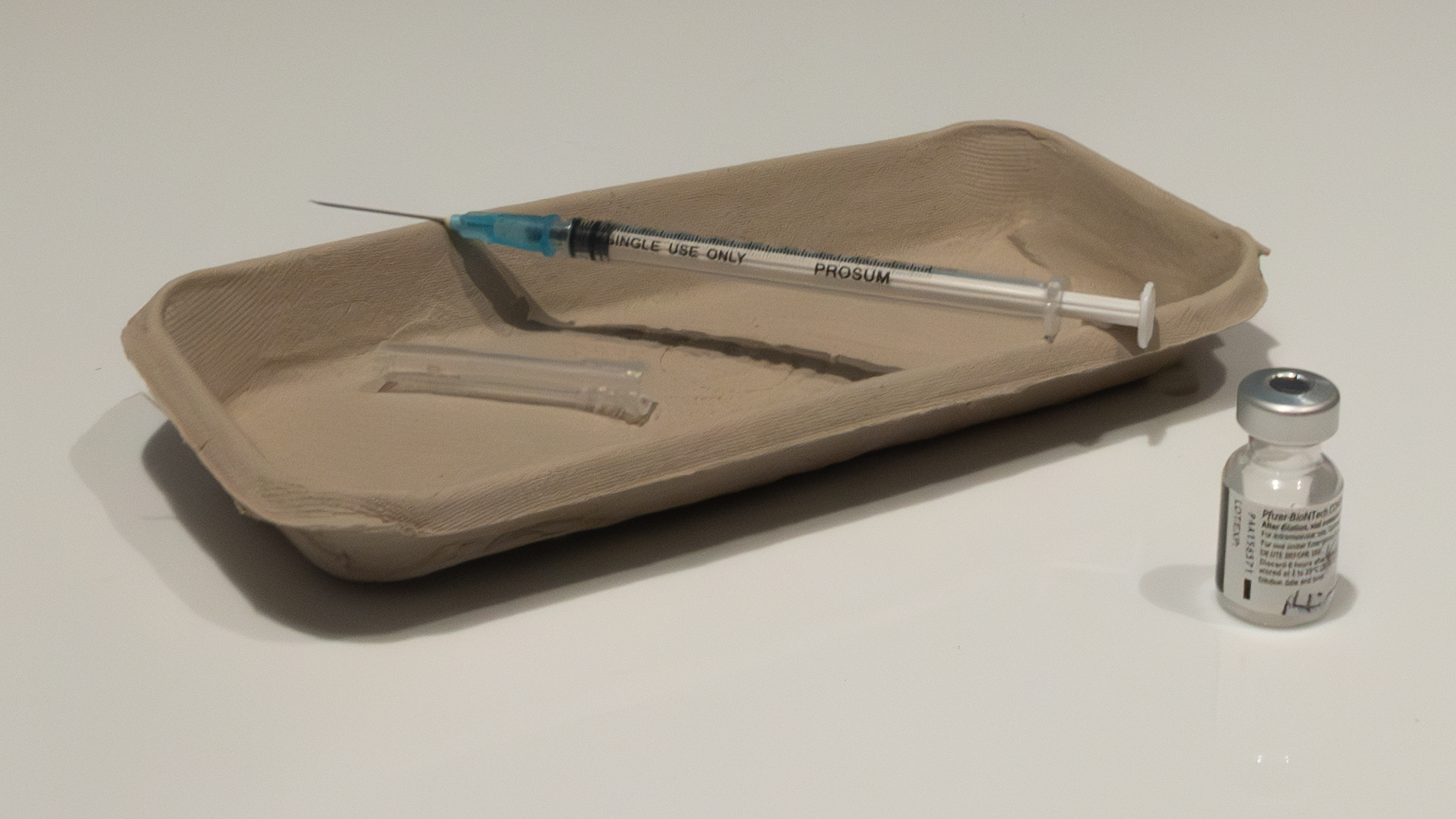
mRNA vaccines are quick to design and easy to update. They also have a nagging weakness. The protection they generate can fade within months, and the antibodies they raise tend to fixate on whatever version of the virus the body saw first. Show the immune system a newer variant and it often shrugs, reaching back for its old playbook instead of building fresh defenses. Immunologists call this antigenic imprinting, and it is one reason booster shots keep chasing a moving target.
A team led by Kautilya Jena and Ivan Zanoni at Boston Children's Hospital and Harvard Medical School decided to attack that problem from an unusual direction. Instead of redesigning the vaccine itself, they added an ingredient borrowed from fungi.
Borrowing a trick from yeast
The addition is called mannadjuvant. It combines mannan, a sugar polymer found in fungal cell walls, with aluminum hydroxide, the aluminum salt that has been used in vaccines for decades. Mannan is not random filler. It latches onto a pattern-recognition receptor named dectin-2, a sensor the immune system normally uses to detect fungal invaders. By deliberately tripping that alarm at the injection site, the researchers hoped to steer inflammation in a more productive direction.
They tested the idea by mixing mannadjuvant into an mRNA vaccine built against the original SARS-CoV-2 spike protein, the ancestral version from early in the pandemic. Then they compared the adjuvanted shot against the standard formulation in mice and in non-human primates.
The boosted vaccine did two things at once. It made the immune response bigger, and it made the response last longer. That combination is hard to achieve. Adjuvants that crank up the initial reaction often burn out fast, leaving little behind. This one built responses that stuck around.
Antibodies against variants the vaccine never showed
The more surprising result involved variants. The vaccine only contained the ancestral spike. Yet animals given the mannadjuvant version produced neutralizing antibodies against variants of concern known for slipping past immunity, the high-escape strains that usually blunt older vaccines. In other words, the fungal sugar helped the immune system generalize beyond the exact sequence it was trained on. It pushed past the imprinting that normally locks responses onto the first antigen seen.
To figure out why, the team traced what mannadjuvant does inside the draining lymph node, the small hub where immune cells gather to plan their response. Two signals mattered. The adjuvant stretched out production of type I interferon, an antiviral messenger, and it strengthened signaling through interleukin-1, an inflammatory cue. The researchers report that these two effects were both necessary and sufficient to explain the benefit. Block them and the advantage disappeared. Supply them and the effect returned, whether in mouse lymph nodes or in human cells.
What the study does not settle
This work lives in mice, monkeys, and cultured human cells. That is a serious body of evidence for a preclinical study, and non-human primates are a meaningful step up from rodents alone. But no human has received mannadjuvant in this study, and animal immune responses do not always predict what happens in people. Aluminum hydroxide is well characterized in human vaccines; deliberately engaging dectin-2 to prolong interferon and IL-1 signaling is newer territory, and durability and safety over the long run will need clinical testing. The neutralizing antibodies were measured in the lab, which is a proxy for real-world protection rather than proof of it.
Still, the logic is appealing. Rather than re-engineering the vaccine every time a variant appears, this approach tunes the body's own response so it covers more ground from a single, older antigen. The authors frame it as a way to harness antifungal sensors to make mRNA vaccines more potent and more durable.
There is a broader point here about where vaccine gains might come from next. Much of the field has focused on the antigen, the piece of the pathogen the shot presents. This study is a reminder that the instructions wrapped around that antigen, the adjuvant telling the immune system how urgently to respond and for how long, may be just as important. Sometimes the fix is not a better picture of the enemy. It is a louder, longer alarm.
Jena, K. K. et al. "A glycan-based adjuvant expands the breadth and duration of protection of mRNA-based vaccines." Nature Immunology, 2026. doi.org/10.1038/s41590-026-02517-3
PubMed PMID: 42174265.
Photograph: The wub, CC BY-SA 4.0, via Wikimedia Commons.
Comments