
Walk along a healthy stream on a warm evening and you might see it: a haze of insects lifting off the water, and birds darting through the swarm to catch them. That everyday scene turns out to be a measurable ecological signal, and it holds across an entire continent.
A new analysis in Nature Ecology & Evolution links the health of American rivers to the birds that live beside them. The insects that hatch out of streams do not just vanish into the air. They feed the birds on the bank. And where those insects are abundant, the study finds, insect-eating birds are far more common.
What the water sends into the air
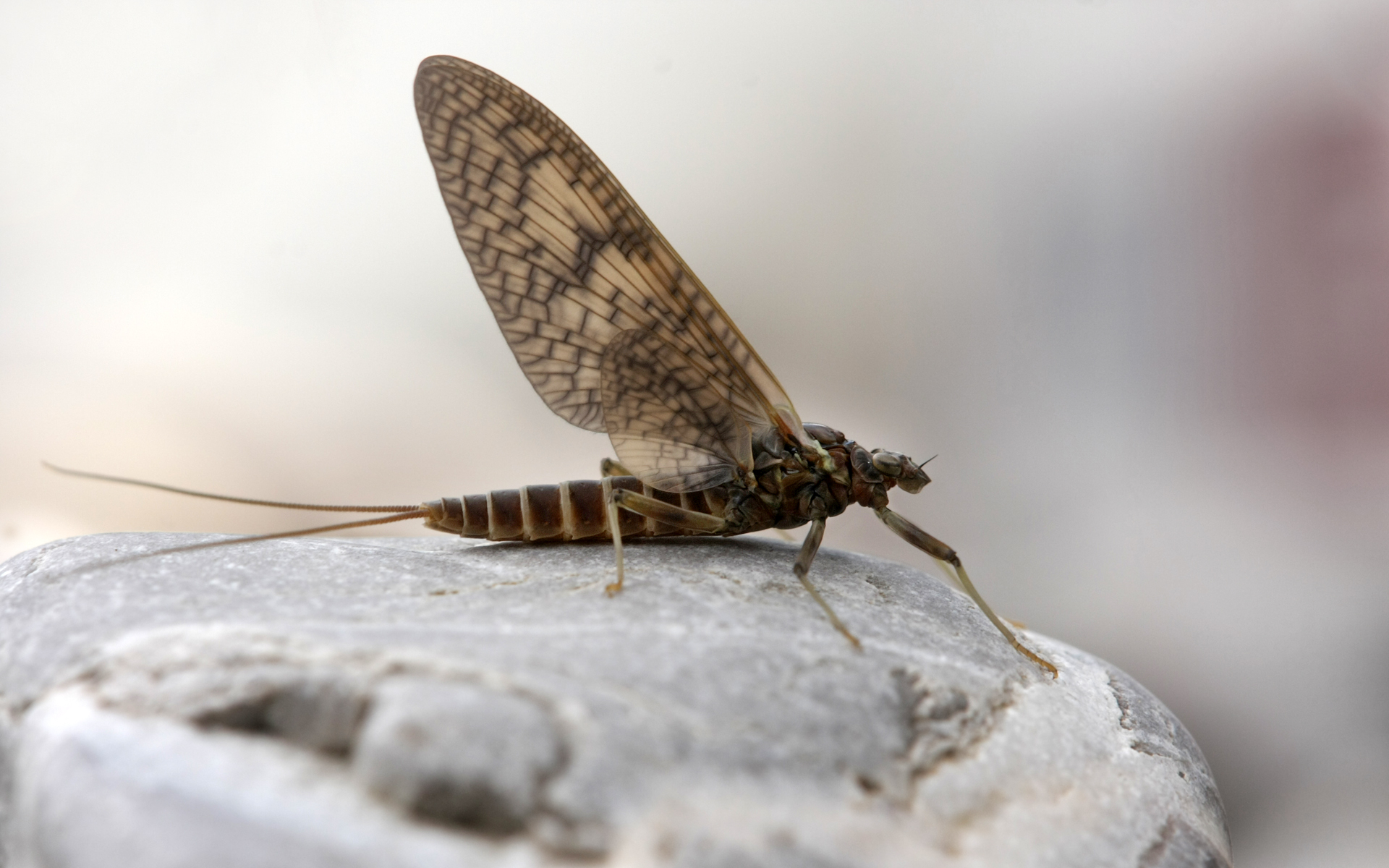
The researchers, Christian Schürings and Julian Olden of the University of Washington, focused on three groups of aquatic insects: mayflies, stoneflies and caddisflies. Biologists lump them together as EPT, short for Ephemeroptera, Plecoptera and Trichoptera. These insects spend their larval lives underwater, then emerge as flying adults. They are picky about water quality, so a river with many EPT species is usually a clean, well-functioning one.
Schürings and Olden matched EPT records against bird survey data for 288 bird species across 14,177 rivers in the contiguous United States. The pattern was hard to miss. Rivers with high EPT richness supported noticeably more birds than rivers where those insects were scarce.
The clearest effect showed up in aerial insectivores, the birds that hunt on the wing. Swallows, flycatchers and their relatives were more than three times as prevalent at sites with high EPT richness compared with sites where it was low. That is a big gap for a single environmental measure to explain, and it held up even after the team accounted for how people use the surrounding land.
A link that survives farms but frays in cities
One of the more useful findings is where the connection stayed strong and where it weakened. The insect-to-bird link held across very different kinds of rivers: fast and slow, warm and cold, even streams that dry up for part of the year. It also persisted in heavily farmed landscapes, as long as the rivers themselves still carried plenty of EPT species.
Cities were the exception. In urbanized areas the association got weaker. The authors do not claim to have pinned down why, but the result fits a familiar story about how urban rivers lose their sensitive insects and, apparently, some of the bird life those insects would otherwise support.
There was also a fairness to the numbers. The biggest gains in bird prevalence came at rivers that started with low bird numbers. In other words, improving insect life seems to help most exactly where birds are currently struggling, rather than piling more onto already rich sites.
Why a bug count matters for conservation
Freshwater and land are often managed as if they were separate problems. This work argues they are not. Energy and nutrients move back and forth across the water's edge, and emerging insects are one of the main couriers. Protect the stream, and you are also feeding the woods and fields around it.
That framing has a practical edge. Freshwater conservation is frequently justified by what it does for fish or drinking water. Here is continental-scale evidence that it delivers a bonus on land, in the form of birds. The authors describe these as co-benefits, gains that come along for free when rivers are kept healthy.
Some caution is in order. This is a correlational study built on large survey datasets, so it maps a strong association rather than proving that insects directly cause bird abundance river by river. EPT richness is a stand-in for insect emergence, not a direct measurement of how many bugs actually take flight. And bird prevalence, the measure used here, is not the same as counting nests or fledglings. Local studies had already shown that emerging insects boost bird reproduction and survival; what this paper adds is evidence that the pattern scales up.
The takeaway is straightforward. If you want more swallows over the fields, one of the better things you can do is keep the mayflies coming out of the river.
Schürings, C. et al. "Cross-ecosystem linkages between freshwater insects and riparian birds across the USA." Nature Ecology & Evolution, 2026. doi.org/10.1038/s41559-026-03041-1
PubMed PMID: 41946836.
Photograph: Richard Bartz, CC BY-SA 2.5, via Wikimedia Commons.
Comments