

CAR-T cells are spectacular against blood cancers and frustrating against almost everything else. Engineer a patient's T cells to recognize a tumor marker, infuse them back, and leukemias can melt away. Point the same cells at a breast or pancreatic tumor and they tend to stall. Two problems get in the way. Solid tumors build a hostile microenvironment that shuts T cells down, and their surface markers are patchy, so cancer cells that lack the target antigen simply slip through.
A team led by researchers at Harbin Medical University went after both problems at once, using an unlikely tool: the greasy little bubbles that bacteria shed from their outer membranes. The work appeared in Nature Biomedical Engineering.
Turning a bacterial nuisance into a delivery truck
Outer membrane vesicles, or OMVs, are nanoscale sacs pinched off from the surface of Gram-negative bacteria. The immune system treats them as danger signals, which is exactly why they draw interest as cancer therapies. They rev up inflammation right where you want it. The Harbin group turned that raw immune-provoking quality into something more precise.
They built a platform they call BROAD-CAR, short for bacterial OMV-based immunosuppression reversal and optimized antigen decoration. The engineered vesicles do two jobs. On their surface they display a high-affinity antibody against PD-L1, the molecule tumors use to switch off incoming T cells through the PD-1/PD-L1 checkpoint. Inside, they carry plasmids, loops of DNA that encode the very antigen the CAR-T cells are built to recognize.
The anti-PD-L1 antibody does two things. It anchors the vesicle to the tumor, since PD-L1 is often abundant on cancer cells, and it releases the brake that would otherwise silence the T cells. Meanwhile the plasmid cargo instructs tumor cells to start making the target antigen themselves.
Making cancer cells wear the target
That second trick is the clever part. Antigen heterogeneity is a core reason solid tumors escape CAR-T cells. If only some tumor cells carry the marker, the rest survive and the cancer comes back. By delivering antigen-coding DNA directly into the tumor, BROAD-CAR forces cancer cells to paint the target onto themselves in situ. The authors report that this let CAR-T cells lyse tumors that were antigen-heterogeneous, and even ones that started out antigen-negative.
In breast cancer mouse models, the combination boosted the antitumor activity of CAR-T cells both in the dish and in living animals. The vesicles improved the tumor microenvironment, which in turn let the CAR-T cells expand in greater numbers. Treated mice showed reduced tumor recurrence and less metastasis. The researchers describe the approach as safe and efficient in their models, and frame it as a way to widen where CAR-T therapy can be used.
Promising, with the usual asterisks
The caveats here are the ordinary ones for early cancer engineering, and they matter. Everything was done in mice, and mouse tumors are a forgiving stand-in for human disease. Bacterial vesicles are potent immune stimulants, which cuts both ways: the inflammation that helps recruit T cells is also the kind of response that needs careful dosing before it reaches people. Getting plasmids to express reliably across a whole tumor, rather than in a scattered handful of cells, is another open question. And "antigen-negative tumor killing" in a controlled model is a long way from a durable clinic-ready result.
Still, the design is worth noticing because it stacks several jobs into one particle. Instead of adding another separate drug to an already complex cell therapy, the engineered vesicle carries the checkpoint blocker and the antigen instructions together, and homes to the tumor on its own. That is the kind of consolidation synthetic biologists like: fewer moving parts, more work per part. Whether it survives the jump out of mice is the question that decides everything.
Li, X. et al. "Engineered outer membrane vesicles enhance solid tumour CAR-T cell therapy." Nature Biomedical Engineering, 2026. doi.org/10.1038/s41551-025-01575-6
PubMed PMID: 41501251.
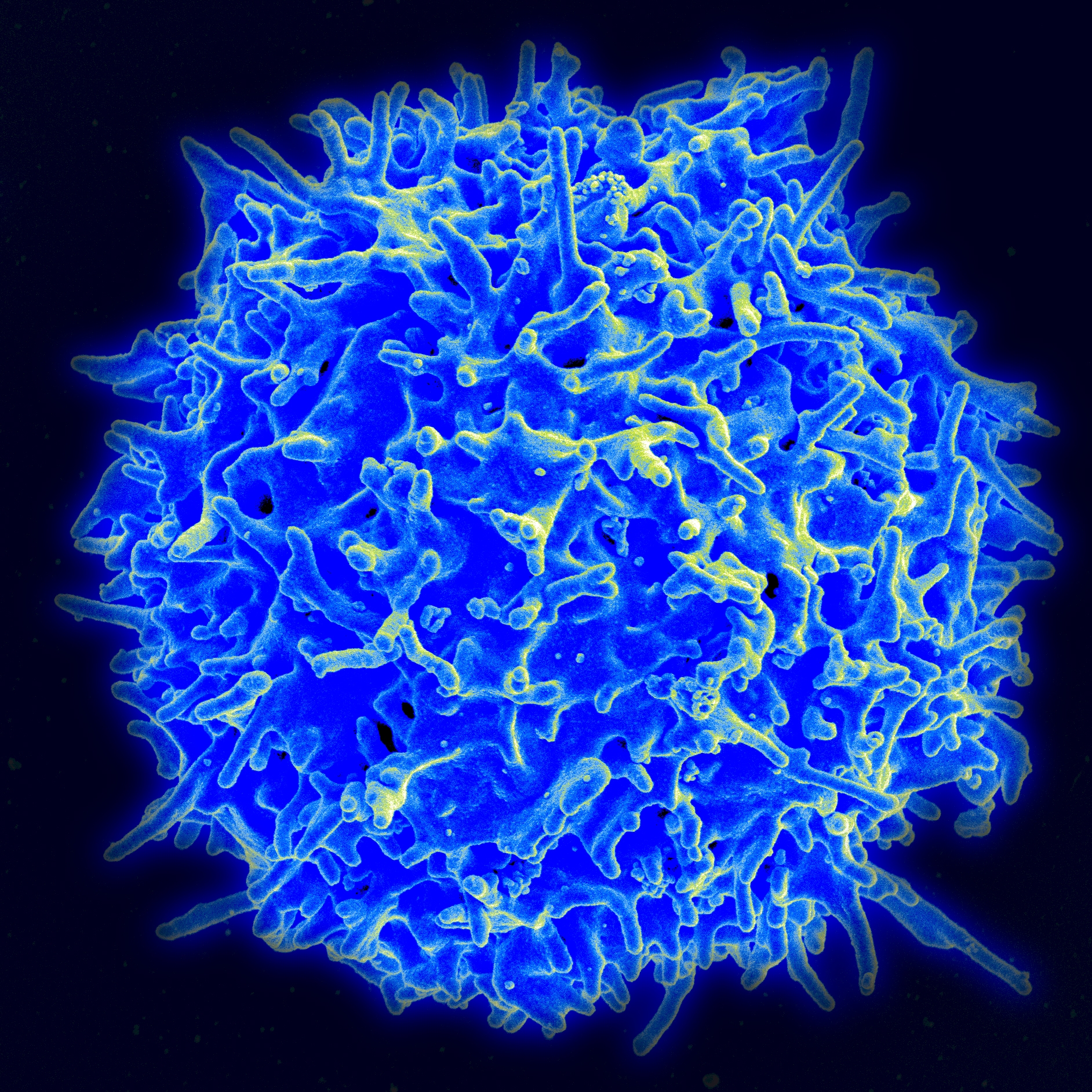
Photograph: NIAID/NIH, Public domain, via Wikimedia Commons.
Comments