


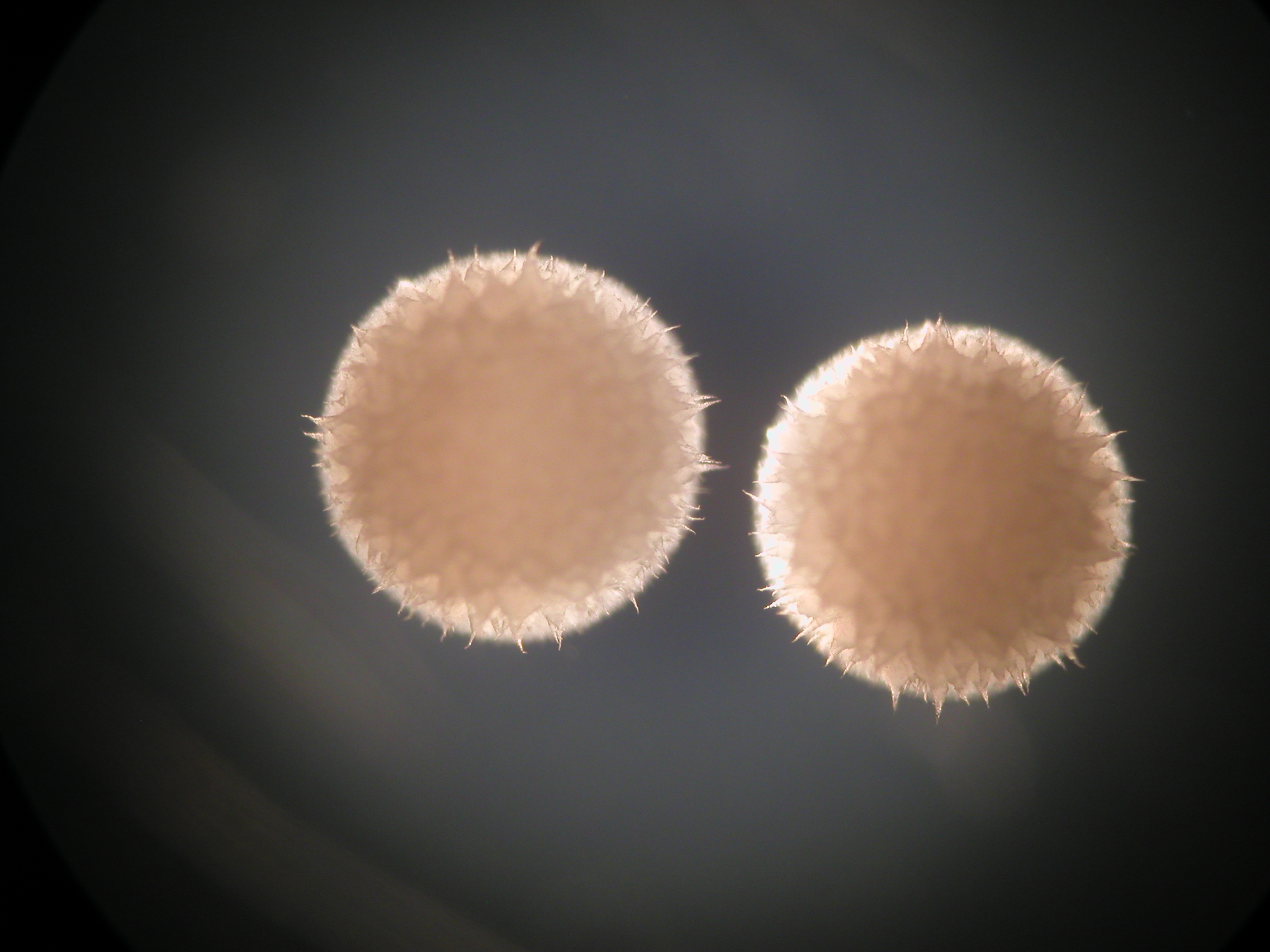
Soil bacteria in the genus Streptomyces are the reason a lot of your medicine cabinet exists. They make roughly two-thirds of the antibiotics used in the clinic, plus antifungals, anticancer agents, and immunosuppressants. But these microbes are frustrating factories. Most of the gene clusters that could make a useful molecule sit silent, switched off under lab conditions. To coax out more product, industrial labs have spent decades blasting bacteria with UV light or chemicals and then screening thousands of survivors, hoping a lucky mutation nudges yields upward. It is slow, and it mostly generates single-letter typos in the genome rather than the bigger rearrangements that reshape what a cell can do.
A team led by researchers at Zhejiang University, the Chinese Academy of Sciences, and Princeton has now tried a blunter instrument, and it worked better than the standard toolkit. Writing in Nature Communications, they fired high-energy pulsed electron beams at bacteria and found the approach snapped DNA in ways that dramatically remodeled the genome while leaving the cells alive enough to keep producing.
Why breaking chromosomes on purpose helps
The logic runs against instinct. A double-strand break in DNA is one of the most dangerous things that can happen to a cell. But when a cell repairs those breaks imperfectly, it can shuffle, delete, or duplicate whole chunks of sequence. These are structural variants, and they are far more consequential than point mutations because they can flip dormant gene clusters into active ones. The trick is causing enough breaks to force big changes without simply killing everything.
The group compared six irradiation methods head to head in Streptomyces lividans 1326, a common lab workhorse. High-energy pulsed electron beams, which they abbreviate HEPE, hit a sweet spot the others missed. The beams induced strong double-strand breaks and extensive structural variants, and those rearrangements reorganized not just the linear sequence but the three-dimensional folding of the chromosome. That reshuffling switched on secondary metabolite production that had been dormant.
Record yields and two new molecules
The practical payoff shows up in the numbers. The authors paired the electron beam with high-throughput metabolomics, a screening setup they call HEPE-HiTMS, to sift through the mutated strains for anything newly active. The combination surfaced two previously undescribed secondary metabolites, each carrying an unusual carbon-nitrogen linkage of the kind chemists find interesting because it hints at novel enzymatic chemistry.
Then they pushed on production strains. Applied across several microbes, HEPE drove what the authors describe as record-high output of clavulanic acid, the compound that protects penicillin-class drugs from bacterial resistance enzymes and is a real bottleneck in manufacturing. It also boosted production of microcin J25, a peptide antibiotic, to record levels, and markedly raised yields of lovastatin, a cholesterol-lowering drug. Getting improvements across three different products and multiple host organisms suggests the method is not a one-off fluke tied to a single strain.
Where the caveats sit
A few things are worth keeping in perspective. Structural variation is a scattershot process by nature. HEPE reshuffles the genome and you screen for winners; it does not aim at a chosen target the way CRISPR editing does. So the value here is in speed and reach across a whole genome, not surgical precision. The paper also reports yields relative to starting strains and other mutagenesis methods rather than against every commercial process out there, so "record-high" is a claim about this comparison set. And high-energy electron beam equipment is not something every fermentation lab has parked in the corner, which will shape how quickly the technique spreads beyond groups with accelerator access.
Still, the direction is compelling. Much of the chemical diversity encoded in microbial genomes never gets expressed, and unlocking those cryptic clusters is one of the more promising routes to new antibiotics at a moment when the pipeline is thin. A tool that reliably jolts genomes into new configurations, while keeping cells productive, gives strain engineers a faster way to search that hidden space. The researchers frame HEPE as useful for both discovering cryptic metabolites and improving industrial strains. If it holds up in other hands, breaking DNA carefully may become a standard move rather than a last resort.
Feng, X. et al. "Enhancing microbial metabolic capacity through high-energy electron beam-induced intense structural variations." Nature Communications, 2026. doi.org/10.1038/s41467-026-69723-3
PubMed PMID: 41714629.
Photograph: Snuupo, CC BY-SA 4.0, via Wikimedia Commons.
Comments