


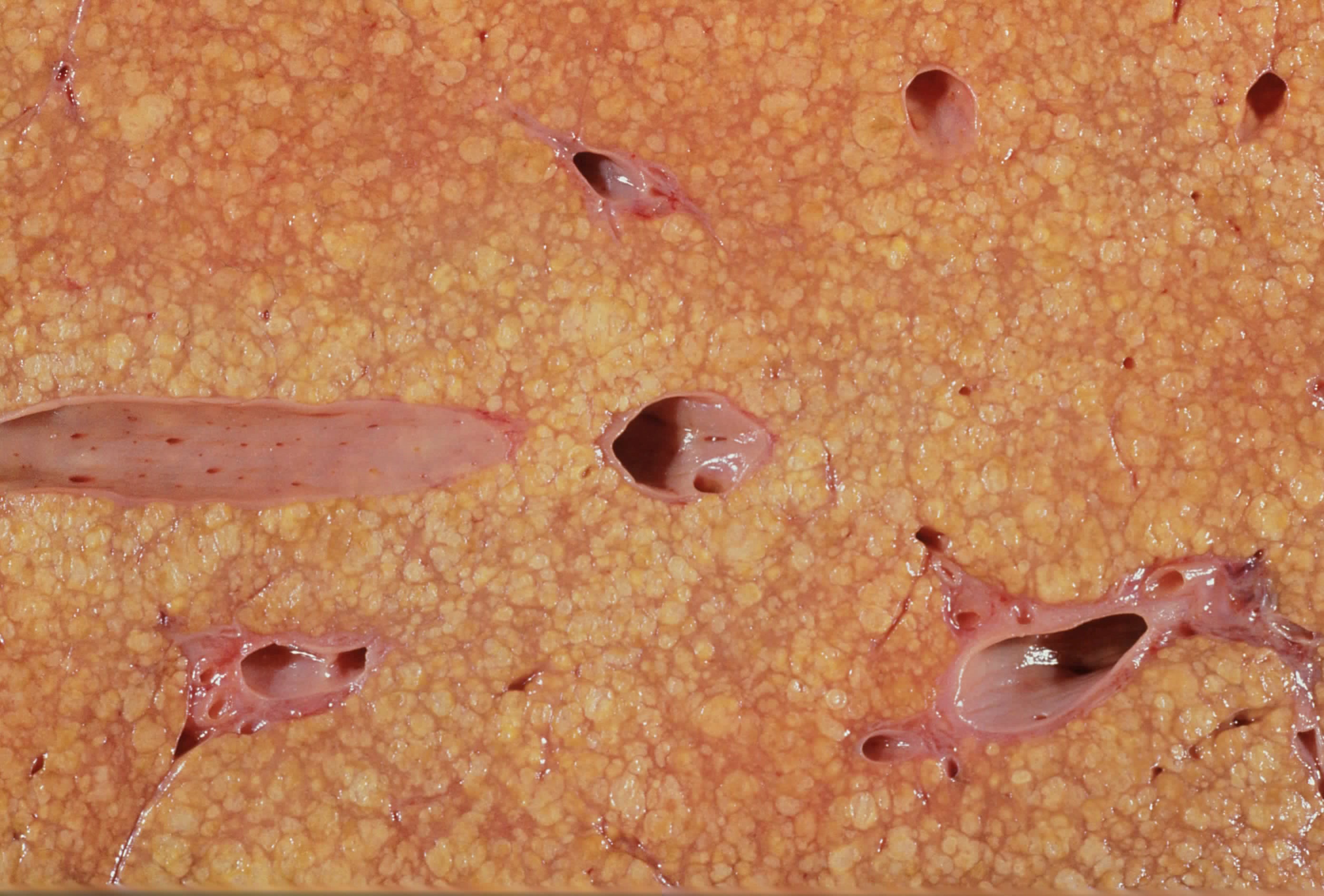
An electrocardiogram is supposed to tell you about the heart. Ten sticky electrodes, a few seconds of squiggles, a verdict on rhythm and voltage. Yet those same tracings carry faint fingerprints of trouble elsewhere in the body, and a Mayo Clinic team has now shown that a machine can read one of them: the silent scarring of an advanced liver.
The disease they went after is easy to miss. Advanced chronic liver disease affects an estimated 2 to 5 percent of the general population, and much of it goes undiagnosed until the damage is far along. There are no obvious early symptoms. People feel fine while fibrous tissue slowly replaces working liver. By the time a doctor thinks to look, options have narrowed.
So Douglas Simonetto and colleagues asked a blunt question. If an algorithm can spot the liver's shadow in an ECG that was recorded for other reasons, does telling the doctor actually change anything? Their trial, published in Nature Medicine, was built to answer exactly that.
A trial that tested the doctors, not just the model
This was a pragmatic, cluster-randomized study. Rather than randomize individual patients, the researchers randomized 98 primary care teams. Clinicians on the intervention side, 123 of them, could see the results of an ECG-based machine learning model. The 122 clinicians in the usual-care arm could not. When the model read an ECG as high risk for advanced liver disease, the intervention clinicians got a notification.
Then everyone went about ordinary practice. A total of 15,596 adults had 12-lead ECGs as part of routine care and met the criteria, split into 8,034 in the intervention group and 7,562 controls. The main thing the team wanted to count was simple: new diagnoses of advanced liver disease with fibrosis within 180 days of the ECG, each one confirmed by follow-up liver assessments rather than taken on faith.
The notification worked. New diagnoses of advanced liver disease reached 1.0 percent in the intervention arm versus 0.5 percent under usual care, an odds ratio of 2.09 (95% CI 1.22 to 3.55, P = 0.007). Roughly a doubling. Zoom in on the patients the model actually flagged and the gap widens: among ECG-positive people, 4.4 percent were newly diagnosed in the intervention arm against 1.1 percent in controls, an odds ratio of 4.37.
Catching the earlier, quieter cases too
The team also tracked any fibrosis, not just the advanced kind, as a secondary measure. Here the effect was larger. Detection rose to 1.7 percent versus 0.5 percent across the whole cohort, and to 8.4 percent versus 1.1 percent among the patients the model had flagged. That matters, because fibrosis caught earlier is fibrosis you can sometimes slow or reverse by treating the cause, whether that is alcohol, viral hepatitis, or fatty liver tied to metabolic disease.
What makes the approach appealing is that it rides on data hospitals already collect. No new blood draw, no scan, no extra clinic visit. The ECG is sitting in the chart. An algorithm reads it a second time and whispers, look at the liver.
Where the honest limits show
The authors do not oversell it. The number of cases found came in below what population estimates would predict, and they attribute that mostly to human behavior: clinicians did not always act on the AI-driven recommendation. A flag is only useful if someone follows it. That gap between what a model detects and what a clinic does with the detection is the real bottleneck, and it is a people problem more than a math problem.
Some other caveats are worth keeping in view. The work ran inside one health system's primary care network, so how it travels to different populations and workflows remains to be seen. The model finds risk, not disease; every positive still needs confirmatory liver testing, which is why the trial built that step in. And an odds ratio near two, while real, still leaves most advanced disease uncaught in a single pass.
Still, the core idea is hard to unsee. A test we have run billions of times, for something else entirely, holds a readable signal about a different organ. The trial (registered as NCT05782283) suggests the signal is not just detectable but clinically useful, if the humans in the loop are willing to chase it.
Simonetto, D. A. et al. "Detection of undiagnosed liver cirrhosis via AI-enabled electrocardiogram: a pragmatic, cluster-randomized clinical trial." Nature Medicine, 2026. doi.org/10.1038/s41591-025-04058-y
PubMed PMID: 41408416.
Photograph: Narraburra, CC0, via Wikimedia Commons.
Comments