Most people who hear a bird cannot name it. That has always been the ceiling on citizen science: the data is only as good as the volunteer, and a birder who mixes up a willow warbler with a chiffchaff quietly poisons the dataset. A team led by Otso Ovaskainen decided to stop asking people to identify anything. Just point a phone at the sound and hit record. The machine handles the rest.
Their study, published in Nature Ecology & Evolution, describes a Finnish smartphone app that collected 15 million bird detections over two years. The trick is that the app never trusts the person holding it to know a redwing from a robin. It ships the raw audio to a server, where a machine-learning classifier does the identifying. That single design choice flattens the biggest source of noise in volunteer wildlife data.
Why raw audio beats a checklist
Traditional bird surveys ask people to report what they saw or heard. Two problems follow. Skilled birders cluster in convenient, well-studied places, so the map fills in around cities and roads and stays blank everywhere else. And a report is a final answer. If the classifier improves next year, the old records are stuck.
Sending audio fixes both. Because the recording itself is stored, it can be re-checked and re-classified later as the models get better. A detection logged today is not frozen. It can be validated, corrected, and reused. The authors also fought the geographic bias directly, using timed interval recordings and a network of permanent point-count stations so the data was not just a portrait of wherever enthusiasts happened to stand.
Then comes the part that makes this more than a fancy tape recorder. The system feeds those detections into what the authors call a digital twin: a model of Finland's bird life that updates continuously and combines the fresh app data with decades of accumulated ecological knowledge. It is meant to run in real time, not to be rebuilt from scratch every season.
The payoff is a forecast, not a snapshot
A static map tells you where birds were. A digital twin tries to tell you where they are and where they will be. When the researchers checked the twin-informed predictions against independent test data they had held back, the models were more accurate at forecasting bird distributions across space and time than the alternatives. That is the whole point. Conservation decisions depend on knowing what is happening now and what is coming next, not what a survey found three summers ago.
The appeal of the approach is that it scales. A person who cannot tell a warbler from a wagtail can still generate useful data, which widens the pool of contributors enormously and could push monitoring into regions that trained observers rarely reach. In principle you could point the same pipeline at any place with a decent number of smartphones and a classifier trained on local species.
What the app cannot do yet
Some limits are worth stating plainly. This ran in Finland, a wealthy country with strong internet coverage, a long birdwatching culture, and species that acoustic classifiers already handle reasonably well. Whether the same setup performs in a noisy tropical forest with hundreds of overlapping calls and no reference recordings is an open question. Acoustic detection also favors birds that vocalize often. A silent raptor or a species in its quiet season will be undercounted no matter how good the microphone. And the classifier's own blind spots become the model's blind spots. If it struggles with a particular call, the digital twin inherits that struggle.
Still, the shift here is real. For years the field has treated volunteer skill as a fixed constraint to be corrected for after the fact. Ovaskainen's group moved the intelligence off the volunteer and into the system, so the person becomes a sensor rather than an expert. Fifteen million detections in two years suggests a lot of people are willing to be that sensor if you make it easy enough.
Ovaskainen, O. et al. "A digital twin for real-time biodiversity forecasting with citizen science data." Nature Ecology & Evolution, 2026. doi.org/10.1038/s41559-025-02966-3
PubMed PMID: 41593185.
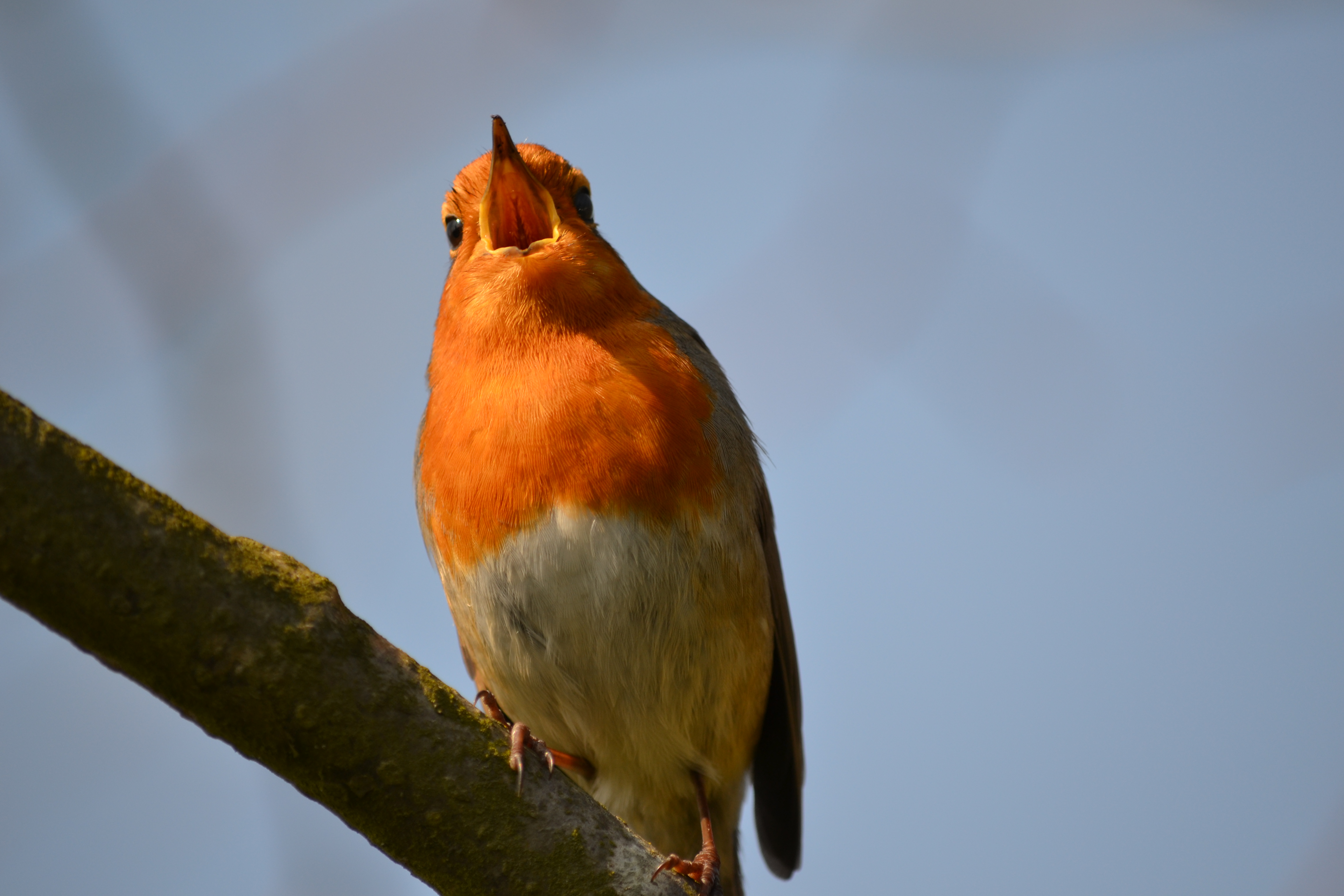
Photograph: Tim Sträter, CC BY 2.0, via Wikimedia Commons.
Comments