


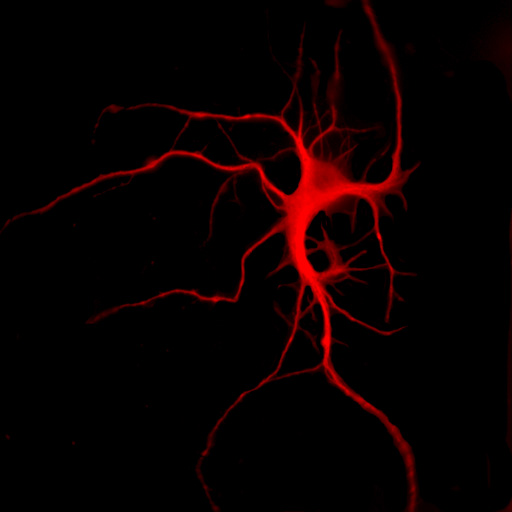
Huntington's disease has an unusually clean villain. A single gene, HTT, carries an expanded stretch of repeated DNA, and the mutant protein it produces slowly poisons neurons. Everyone who inherits the expansion will eventually get sick. That clarity has made Huntington's a magnet for genetic medicine: if you could just turn down the bad protein, you might slow the whole disease. A trial published in Nature Medicine on January 5 tested one way to do exactly that, using a pill instead of a spinal injection. It worked on the molecule it was aimed at. It also had to be stopped early.
The drug is branaplam, and it belongs to a class called splicing modulators. Rather than editing the gene or silencing its RNA with an injected oligonucleotide, branaplam nudges the cell's splicing machinery so that less functional huntingtin protein gets made from the messenger RNA. It is taken by mouth. For a disease where the leading experimental therapies require repeated injections into the spinal canal, an oral option is appealing.
What the spinal fluid showed
The study, called VIBRANT-HD, was a randomized phase 2b trial run by a team at Novartis, paired with preclinical work in nonhuman primates. The design was cautious by intent. The investigators used staggered cohorts and layered on safety monitoring, including blood measurements of neurofilament light chain, a marker that rises when nerve cells are being damaged, plus nerve conduction studies to watch for peripheral nerve trouble.
On its central question, the drug delivered. Branaplam lowered mutant huntingtin in the cerebrospinal fluid compared with placebo. That makes it the first splicing modulator shown to reduce mutant HTT in the spinal fluid of people living with Huntington's. The trial reported that primary outcome descriptively rather than as a formal statistical result, for reasons that become clear below, but the direction was what the biology predicted.
Why the trial stopped
The problem was the nerves. Of the 21 participants in the initial cohort taking 56 mg of branaplam weekly, 18 showed at least one sign or symptom of peripheral neuropathy. That is 85.7 percent. Combined with dose-modeling results, the safety signal triggered early termination of the study. Neurofilament light chain went up in most participants too, another sign that nerve tissue was being stressed.
There is a more hopeful detail buried in that setback. After participants stopped the drug, the elevated neurofilament light chain levels came back down. The nerve damage signal, in other words, appeared to reverse once treatment ended. That does not make the neuropathy acceptable at this dose, but it suggests the effect was tied to ongoing exposure rather than permanent injury.
Reading the result honestly
It is worth being careful about what this trial does and does not establish. It was small, and it was cut short before it could answer whether lowering huntingtin actually slows the disease. Proving that a molecular marker moves in the spinal fluid is not the same as proving people stay healthier for longer. The neuropathy rate at this weekly dose was high enough that branaplam, as tested here, is not a viable therapy. And these are early-cohort numbers from a study that never reached its planned finish.
What the trial does offer is a genuine proof of mechanism. An oral splicing modulator can reach the central nervous system and pull down the toxic protein that drives Huntington's. That matters for a field that has leaned heavily on injected therapies with mixed results. The branaplam story reads less like a dead end and more like a first data point: the approach can lower the target, and the next task is finding a version, or a dose, that does it without hurting the peripheral nerves. For families who carry the HTT expansion and watch the disease coming, that distinction is not academic.
Borowsky, B. et al. "Oral splicing modulator branaplam in Huntington's disease: a phase 2 randomized controlled trial." Nature Medicine, 2026. doi.org/10.1038/s41591-025-04117-4
PubMed PMID: 41491108.
Photograph: Dchordpdx, CC BY 4.0, via Wikimedia Commons.
Comments