


By the time someone learns they have multiple sclerosis, the disease has usually been at work for a while. Nerve fibers in the brain and spinal cord lose their insulating myelin coating, signals misfire, and the damage shows up as blurred vision, numbness, or weakness. The question that has nagged neurologists for years is simple. How long before that first attack does the biology actually start going wrong?
A team led by Ahmed Abdelhak at the University of California, San Francisco went looking for an answer in frozen blood. They compared stored serum samples from people who would later be diagnosed with MS against samples from matched healthy controls, then ran high-throughput proteomics to measure thousands of proteins at once. The pattern they found pushes the clock back much further than a first symptom.
Myelin cracks first, axons later
According to PubMed, the study reports that markers of myelin injury appeared in the blood roughly seven years before symptoms began. That is a long lead time for a disease usually thought of as arriving suddenly. Damage to the nerve fibers themselves, the axons, showed up about a year after the myelin signals, not at the same time. And a third process, the activation of astrocytes (support cells that swell into action during central nervous system injury), only became obvious right around the clinical onset.
So the sequence has an order to it. Myelin takes the early hit. Axons follow. Astrocyte involvement arrives last, near the point where a person would first notice something is wrong. That ordering matters because it hints at what the disease is doing in its silent phase, and it suggests the myelin coating is where the earliest trouble concentrates.
The blood also carried clues about the machinery behind the damage. Changes in the serum proteome pointed to the involvement of interleukin-3 and nuclear factor kappa B signaling during the presymptomatic stage. Both are tied to inflammation and immune cell activity, which fits the long-held view of MS as a disease where the immune system turns on the nervous system. People who carried a previously described autoantibody signature showed more immune cell activity than those who did not, adding another layer to who might be quietly heading toward the disease.
From pattern to possible test
The practical payoff the authors propose is a protein biomarker panel, a defined set of blood proteins that together separated presymptomatic MS samples from healthy ones. If it holds up, such a panel could flag the disease in people at high risk, for instance relatives of patients or individuals with early warning signs on a brain scan, before an attack ever happens.
That would be a meaningful shift. Current MS diagnosis leans on symptoms plus MRI findings, which by definition means the disease has already declared itself. A blood test that reads the biology years earlier could give doctors a window to watch high-risk people closely, and eventually to test whether starting treatment before the first attack changes the course of the disease.
What the study cannot yet claim
This is early-stage work, and the authors are careful about it. The biomarker panel was built and tested within their sample sets, and it still needs validation in separate, larger groups before anyone should read a result off it in the clinic. Discovery proteomics on stored samples is powerful for spotting patterns, but a protein that tracks with future MS in a research cohort does not automatically become a reliable diagnostic. The seven-year figure is an average drawn from a specific set of presymptomatic samples, not a fixed countdown that applies to every person.
There is also the harder question hanging over any early-detection tool. Finding disease years ahead of symptoms is only useful if there is something to do with that information. For MS, disease-modifying therapies exist, so the case for looking early is stronger than for conditions with no treatment. Still, whether pre-symptomatic treatment helps is a separate trial to run.
What this work does establish is that MS leaves a trail in the blood long before it announces itself, and that the trail has a readable structure. Myelin first. That alone reshapes how researchers think about when the disease truly begins.
Abdelhak, A. et al. "Myelin injury precedes axonal injury and symptomatic onset in multiple sclerosis." Nature Medicine, 2025. doi.org/10.1038/s41591-025-04014-w
PubMed PMID: 41115958.
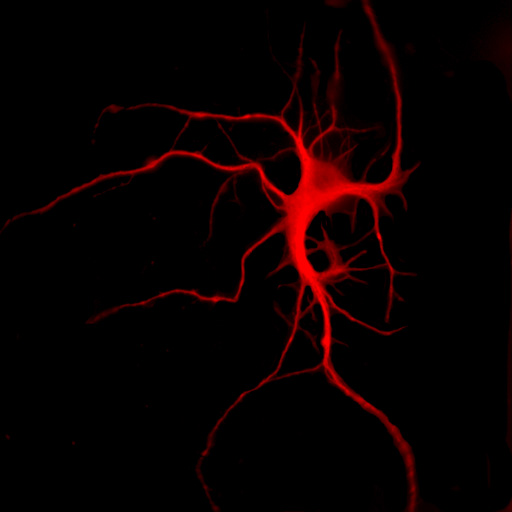
Photograph: Dchordpdx, CC BY 4.0, via Wikimedia Commons.
Comments