


Adeno-associated virus is the delivery truck of modern gene therapy. Three approved therapies in the United States rely on it, and dozens more are in trials. It is small, well tolerated, and it can park a working gene inside cells for years. There is just one catch, and it is a physical one. The truck bed holds about 4,700 letters of DNA, and a lot of the genes doctors most want to fix are far bigger than that.
Shank3, a gene tied to autism, runs past the limit. SCN1A, the gene behind the severe childhood epilepsy Dravet syndrome, does too. For those and hundreds of other large genes, AAV simply cannot carry the whole thing in one shipment.
A group led by Jianbang Lin at the Shenzhen Institutes of Advanced Technology, part of the Chinese Academy of Sciences, has a workaround. Writing in Cell, they describe a method called AAVLINK that splits an oversized gene across separate viral particles and then rejoins the fragments once they are inside the target cell. The reassembled gene is intact, and in their experiments it behaves like the real thing.
Splitting the package, then gluing it shut
Earlier attempts to beat the size limit have leaned on overlapping DNA fragments that recombine on their own or on split-protein tricks. These work, but they tend to leave behind truncated, half-finished proteins that gum up the result. AAVLINK takes a more deliberate route. It uses the Cre enzyme and its lox recognition sites, a pairing molecular biologists have trusted for decades, to force the fragments to link end to end through what the authors call intermolecular DNA recombination.
The payoff, they report, is cleaner joins and far fewer of those truncated protein byproducts. The method also handed the researchers more freedom in how they chopped up a gene in the first place, which matters when you are trying to fit awkwardly shaped sequences into a fixed-size container.
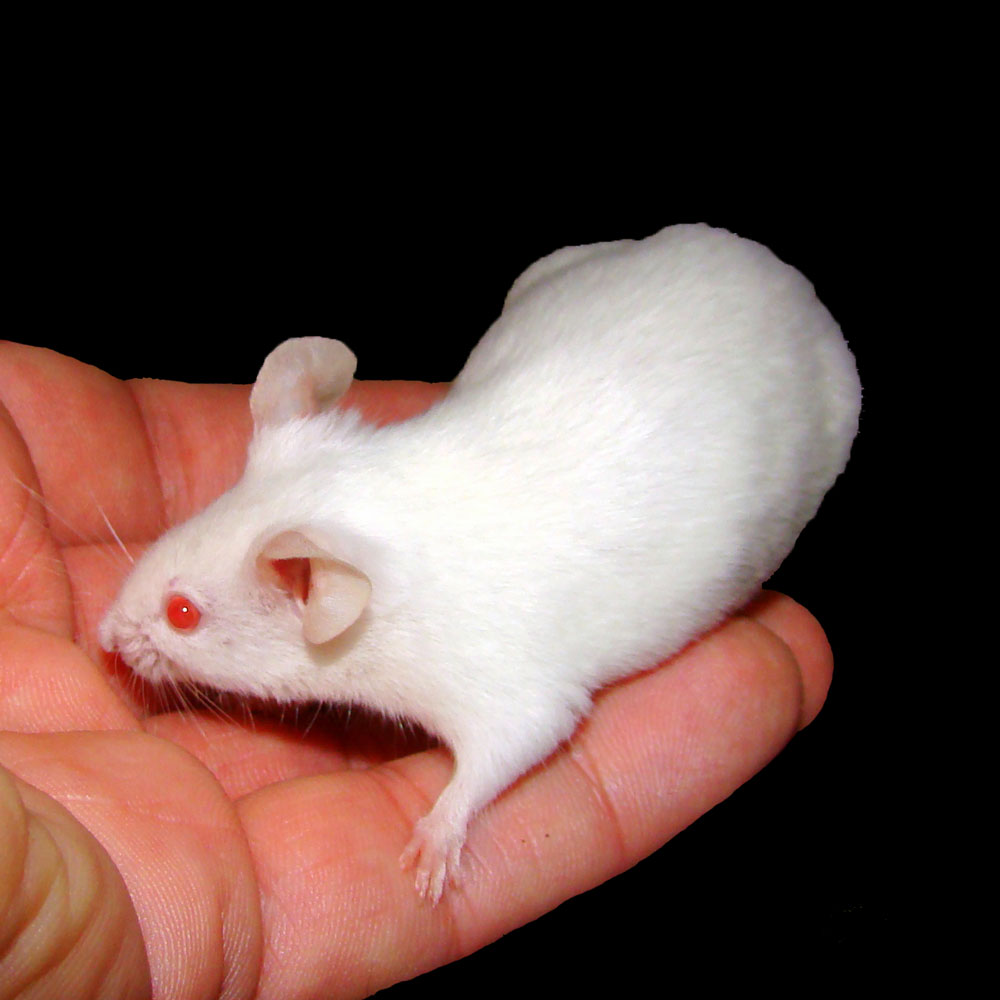
To show it does real work, the team put AAVLINK to the test in mice carrying mutations in Shank3 and in SCN1A. In both cases the delivered gene came back together and produced the full-length protein. Mice modeling the Shank3 defect saw behavioral problems corrected. Mice modeling the SCN1A defect had their seizure phenotypes rescued. Getting a functional copy of either gene into a mammalian brain has been a standing obstacle, and here the reconstituted gene did the job.
A safer version and a stocked shelf of genes
Cre is a powerful enzyme, and leaving it switched on inside a patient's cells raises reasonable safety questions. So the group built a second-generation tool, AAVLINK2.0, using a destabilized form of Cre that does not linger. The idea is to let the enzyme do its splicing and then get out of the way.
They did not stop at two proof-of-concept genes either. The team assembled what amounts to a ready-made vector bank covering 193 large genes associated with genetic disorders, plus five CRISPR-based tools, each verified to reconstitute correctly. That turns a one-off demonstration into something closer to a catalog other labs could pull from.
What this does and does not prove
The honest framing here is that this is mouse work. A gene reassembling correctly in a mouse brain is a genuine result, but it is a long way from a therapy that regulators would let near a child with Dravet syndrome. Cre-lox systems can recombine at unintended sites, and while the destabilized Cre is meant to reduce exposure, the paper does not settle the question of off-target activity in humans. Delivering two separate viral vectors to the same cell also means every step depends on both arriving, which raises the practical bar for dosing in a large organism. None of that is disqualifying. It is the ordinary distance between a clever method and a clinical product.
What AAVLINK offers is a way to stop treating AAV's cargo limit as a hard wall. If the fragments can be shipped separately and reliably knit back together, the roster of diseases that AAV can plausibly address gets a good deal longer. That is the real news: not a cure, but a bigger truck bed, assembled after delivery.
Lin, J. et al. "AAVLINK: A potent DNA-recombination method for large cargo delivery in gene therapy." Cell, 2026. doi.org/10.1016/j.cell.2025.12.039
PubMed PMID: 41605211.
Photograph: Pogrebnoj-Alexandroff, CC BY-SA 3.0, via Wikimedia Commons.
Comments